
How Does Competition Law Affect M&A Transactions Today?
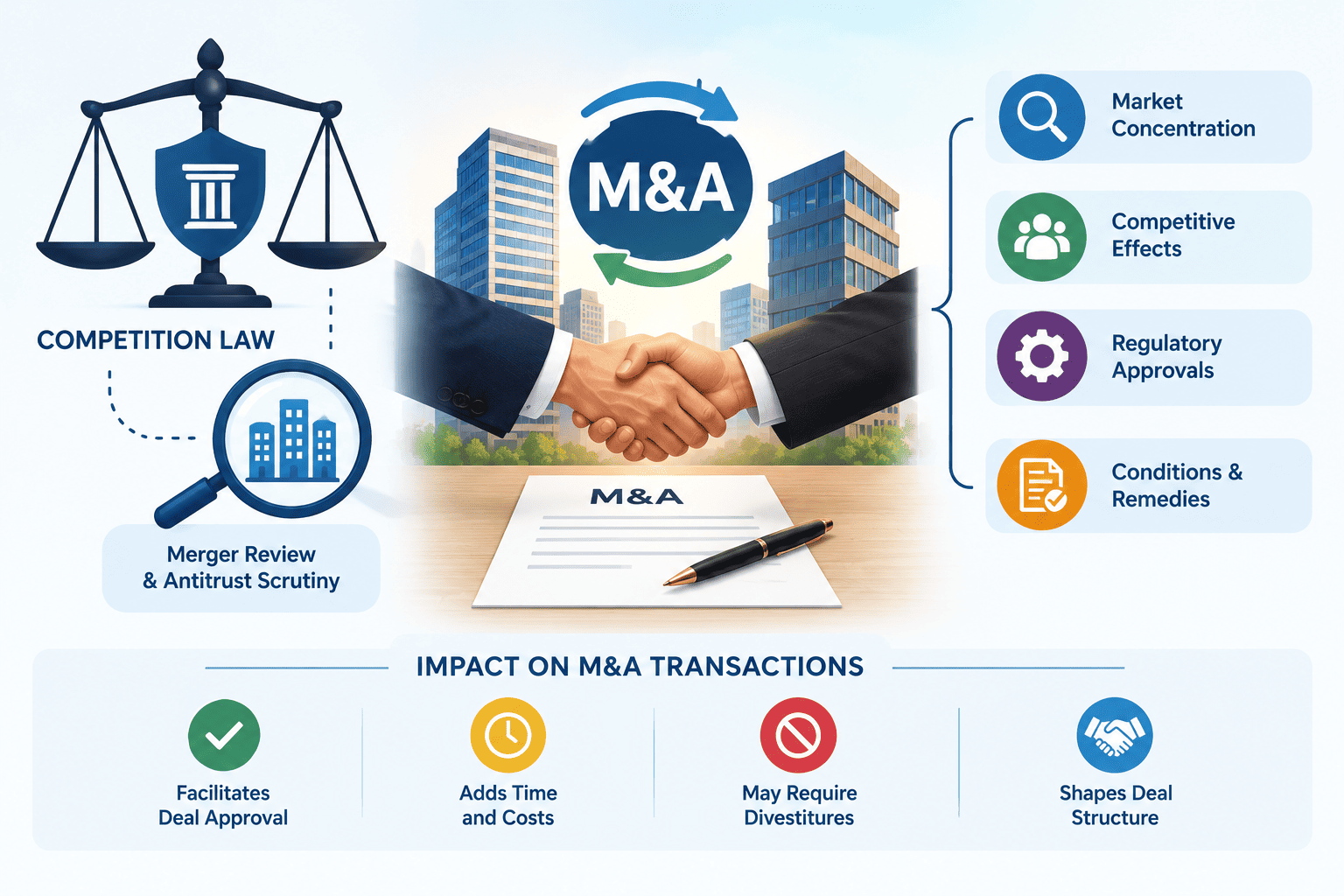
Competition law shapes nearly every significant merger and acquisition. Regulators in the United States, European Union, United Kingdom and other jurisdictions review deals that could substantially lessen competition, raise prices, reduce innovation or harm workers and consumers. In 2025 and 2026 the enforcement landscape has shifted. Aggressive Biden-era approaches have given way to a more pragmatic stance in the US, while Europe continues to modernize its framework with greater attention to scale, innovation and industrial competitiveness. Dealmakers who understand these rules, prepare early and structure transactions with remedies in mind improve their chances of clearance and on-time closing.
The Core Framework of Merger Control
Competition authorities examine whether a transaction may substantially lessen competition or create or strengthen a dominant position. In the United States the key statute is Section 7 of the Clayton Act, enforced by the Department of Justice Antitrust Division and the Federal Trade Commission. Pre-merger notification under the Hart-Scott-Rodino Act triggers a waiting period. The agencies still apply the 2023 Merger Guidelines, which lower the concentration thresholds that create a presumption of illegality and expand theories of harm to include nascent competitors, labor markets and serial acquisitions.
In the European Union the EU Merger Regulation gives the European Commission exclusive jurisdiction over deals meeting turnover thresholds. The Commission assesses whether a concentration would significantly impede effective competition. In April 2026 the Commission published draft new Merger Guidelines for consultation. These guidelines, the first major revision in more than two decades, place greater weight on dynamic effects, innovation, investment and the ability of European firms to compete globally, reflecting recommendations from the 2024 Draghi Report on competitiveness.The United Kingdom’s Competition and Markets Authority applies a share-of-supply and turnover test under the Enterprise Act, updated by the Digital Markets, Competition and Consumers Act. Other jurisdictions, from Australia (moving to mandatory pre-closing review in 2026) to India and Brazil, maintain their own notification thresholds and substantive tests. Global deals routinely face multi-jurisdictional filings, creating timing risk and the need for consistent narratives across agencies.
Current Enforcement Trends in 2025–2026
Data from 2025 show a clear recalibration. In the United States the number of significant merger investigations fell to near-record lows. Settlements and structural remedies returned after years of skepticism. Early termination of the HSR waiting period was reinstated. The expanded HSR form that took effect in early 2025 was later vacated by a federal court in 2026, returning parties to the lighter pre-2025 filing requirements while agencies consider a more durable revision. Enforcement actions still occur, particularly in healthcare, technology and concentrated industrial markets, but the agencies now show greater willingness to accept divestitures that resolve competitive concerns without killing the deal.
Europe recorded no formal prohibitions in 2025. Phase II investigations remained limited, and the overall intervention rate stayed low. The Commission continues to scrutinize digital ecosystems and vertical foreclosure risks, as confirmed by the General Court’s 2026 upholding of the Booking Holdings/Etraveli prohibition. At the same time the draft guidelines signal openness to scale-enhancing transactions that strengthen European competitiveness, provided competition is preserved.
The UK CMA issued dozens of decisions in 2025 without blocking a single deal, aligning with the government’s pro-growth agenda. It has adopted a more restrained approach to global markets, often deferring to remedies accepted elsewhere when UK concerns are addressed.
Across jurisdictions, private equity roll-ups, “killer acquisitions” of nascent rivals and deals involving critical technologies or supply-chain resilience attract heightened attention. Foreign investment reviews (CFIUS in the US, FDI screening in Europe) increasingly intersect with pure competition analysis, adding another layer of complexity.
Practical Effects on Deal Process and Structure
Competition law influences every stage of an M&A transaction.
Due diligence now routinely includes antitrust risk assessment. Parties map overlapping markets, calculate HHI scores, identify potential theories of harm and evaluate the strength of efficiencies or entry arguments. Early economic analysis and internal document reviews help parties decide whether to proceed, restructure or abandon.
Notification strategy requires careful sequencing. Global deals may need filings in a dozen or more jurisdictions. Parties often file first in jurisdictions with shorter timelines or clearer processes and use those clearances to support later filings. Timing agreements with US agencies and pre-notification discussions in Europe can accelerate review when the competitive picture is straightforward.
Remedies have regained importance. Structural divestitures of overlapping assets remain the preferred solution. Behavioral commitments appear less frequently but can address vertical or access concerns. Under the current US approach, simultaneous filing of a complaint and consent decree has returned, giving parties greater certainty. In Europe, Phase I remedies continue to resolve most problematic cases.
Deal documents reflect these realities. Longer outside dates, antitrust-related termination fees, reverse break fees, and covenants requiring parties to offer remedies up to a defined threshold have become standard. “Hell or high water” clauses that obligate the buyer to accept any remedy are rarer because of valuation and integration risks.
Comparison of Key Jurisdictional Approaches
The following table summarizes practical differences that deal teams encounter today:
| Aspect | United States | European Union | United Kingdom |
| Primary test | Substantial lessening of competition | Significant impediment to effective competition | Substantial lessening of competition |
| Notification | Mandatory above HSR thresholds | Mandatory above turnover thresholds | Voluntary but with call-in powers |
| Key guidelines | 2023 Merger Guidelines (still in force) | Draft new guidelines (2026 consultation) | CMA guidance, DMCCA updates |
| 2025 enforcement tone | More open to remedies and settlements | Low intervention rate, focus on dynamics | Pro-growth, no prohibitions |
| Typical review timeline | 30 days + possible second request | 25 working days Phase I; longer Phase II | 40 working days Phase 1; extended Phase 2 |
| Preferred remedy | Structural divestiture | Structural commitments | Structural or behavioral |
| Special focus areas | Labor markets, serial acquisitions, tech | Innovation, scale, digital ecosystems | Killer acquisitions, digital platforms |
This comparison helps parties prioritize resources and anticipate where the heaviest scrutiny is likely to fall.
Strategies for Navigating the Current Environment
Successful dealmakers treat competition law as a core workstream from the outset. They engage specialized counsel and economists early, prepare clean teams for sensitive information exchange, and develop a consistent global narrative that addresses both static and dynamic effects. Where overlaps exist, parties identify clean, viable divestiture packages in advance rather than scrambling under regulatory pressure.
In technology and platform markets, parties must address potential theories around data advantages, network effects and ecosystem entrenchment. In industrial and healthcare sectors, supply-chain resilience and labor-market effects receive closer examination. Cross-border deals benefit from coordinated remedy packages that satisfy multiple agencies simultaneously.
Political and industrial-policy considerations now play a larger role. Authorities increasingly weigh whether a merger strengthens domestic capabilities in strategic sectors against pure competition concerns. Parties that can demonstrate genuine efficiencies, innovation gains and consumer benefits improve their position.
Looking Ahead
Merger control will remain dynamic. The US agencies may refine the 2023 Guidelines through iterative updates while preserving stability. The EU is expected to finalize its new guidelines, embedding greater recognition of scale and dynamic competition. Additional jurisdictions continue to lower or adjust thresholds and introduce call-in powers for below-threshold deals. Digital markets, artificial intelligence, critical minerals and green technologies will attract sustained attention.
For boards and deal teams the message is clear. Competition law no longer functions merely as a procedural hurdle. It is a strategic variable that can determine whether a transaction creates or destroys value. Thorough preparation, realistic remedy planning and early engagement with authorities remain the most effective ways to move deals from signing to closing in today’s environment.
Frequently Asked Questions
1. Do the 2023 US Merger Guidelines still apply under the current administration?
2. How long does a typical multi-jurisdictional merger review take?
3. Are private equity roll-up strategies still viable?
4. What types of remedies do agencies prefer today?
5. How do foreign investment reviews interact with competition clearances?
Last Updated on 25 September, 2026

By entering the email address you agree to our Privacy Policy.