
Green Hydrogen Projects in India: Legal, Regulatory and Project Finance Challenges for Investors in 2026
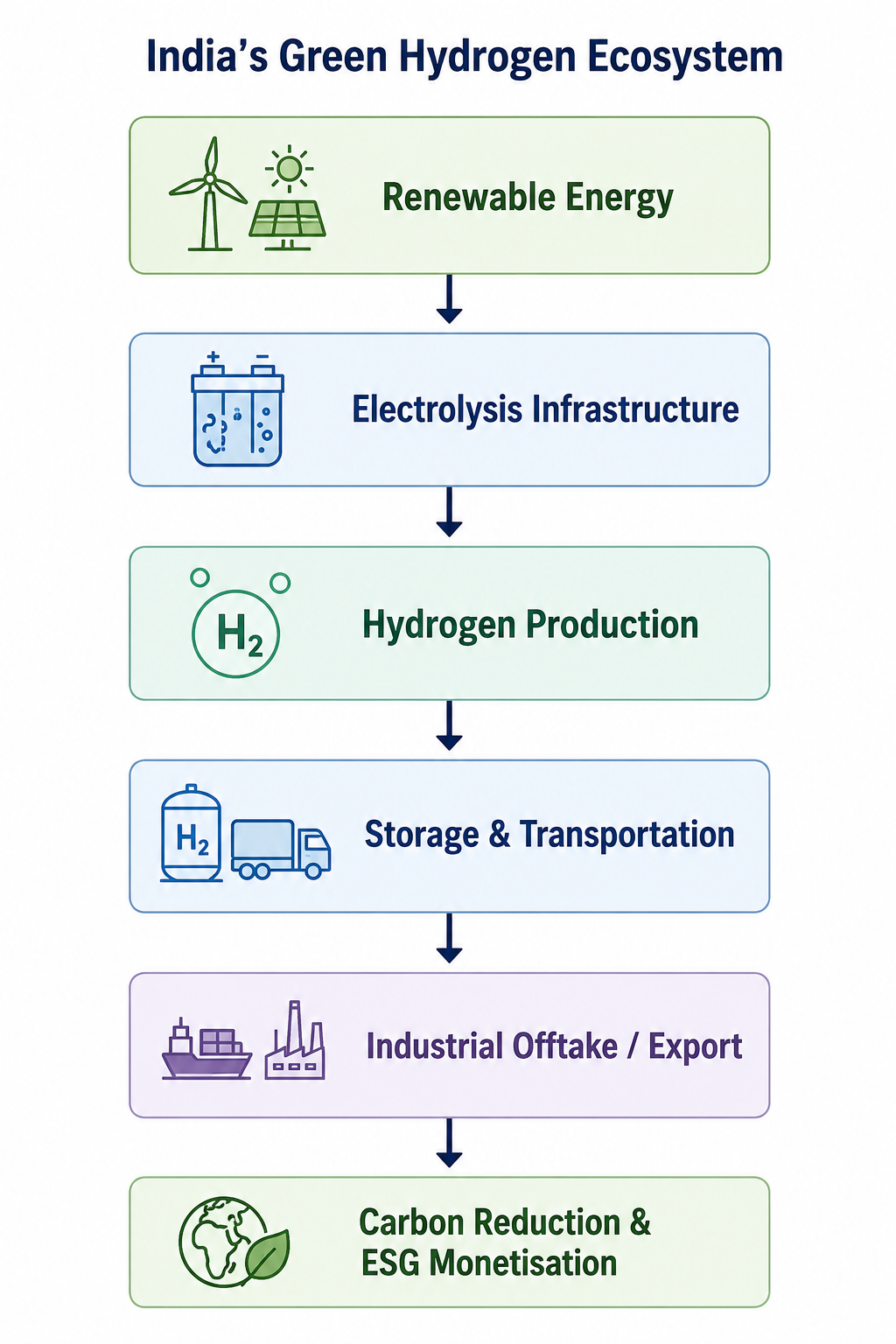
India’s green hydrogen sector has rapidly transitioned from a policy ambition to one of the most closely watched infrastructure and energy transition opportunities globally. As governments accelerate decarbonisation targets and industries search for viable alternatives to fossil fuels, green hydrogen is increasingly becoming central to the future of steel, fertilisers, chemicals, heavy mobility, refining and export-oriented industrial manufacturing.
India’s policy ecosystem led by the National Green Hydrogen Mission aims to position the country not merely as a consumer of green hydrogen, but as a global production and export hub supported by renewable energy integration, electrolyser manufacturing and large-scale infrastructure development.
For investors, however, green hydrogen projects are fundamentally different from conventional renewable energy assets. Unlike standalone solar or wind projects, hydrogen infrastructure combines multiple regulated sectors into a single project ecosystem:
- Renewable energy procurement
- Industrial infrastructure
- Water sourcing rights
- Storage and transportation networks
- ESG and sustainability compliance
- International trade regulation
- Technology performance risk
- Cross-border financing structures
As a result, green hydrogen projects require sophisticated legal structuring, carefully negotiated offtake arrangements and highly specialised project finance models.
This article analyses the evolving legal framework, financing structures, regulatory risks and ESG considerations shaping green hydrogen investments in India in 2026.
India’s Green Hydrogen Opportunity: Why Global Investors Are Paying Attention
India possesses several structural advantages that make it highly attractive for hydrogen development:
| Strategic Advantage | Why It Matters |
| Low-cost renewable power | Hydrogen economics depend heavily on electricity pricing |
| Large industrial demand | Steel, fertiliser and refining sectors create domestic consumption potential |
| Export potential | India is strategically positioned for Europe and Asia-bound exports |
| Policy support | Government incentives reduce early-stage investment uncertainty |
| Manufacturing ecosystem | Domestic electrolyser production may reduce long-term capex |
The sector is now attracting:
- Sovereign wealth funds
- Climate-focused infrastructure investors
- Multilateral institutions
- Private equity funds
- Energy conglomerates
- Industrial manufacturers
- Export-oriented infrastructure platforms
What Makes Green Hydrogen Projects Legally Complex?
Green hydrogen projects are not governed by a single regulatory framework. Instead, they operate at the intersection of multiple legal regimes simultaneously.
Regulatory Matrix Governing Green Hydrogen Projects
| Legal Area | Key Issues |
| Energy Law | Renewable procurement, open access, grid connectivity |
| Environmental Law | Water extraction, pollution approvals, EIA compliance |
| Infrastructure Law | Land acquisition, transmission access, storage approvals |
| Banking & Finance | Security creation, project finance structures |
| FEMA & FDI | Cross-border investment and offshore financing |
| ESG Compliance | Sustainability verification and carbon accountability |
| International Trade | Export certification and carbon border regulations |
This interdisciplinary structure makes legal due diligence substantially more extensive than traditional renewable projects.
Renewable Energy Procurement: The Economic Backbone of Hydrogen Projects
The commercial viability of green hydrogen depends primarily on one factor:
The cost and reliability of renewable electricity.
Electricity accounts for a significant portion of hydrogen production costs, making renewable integration the single most critical economic variable in project structuring.
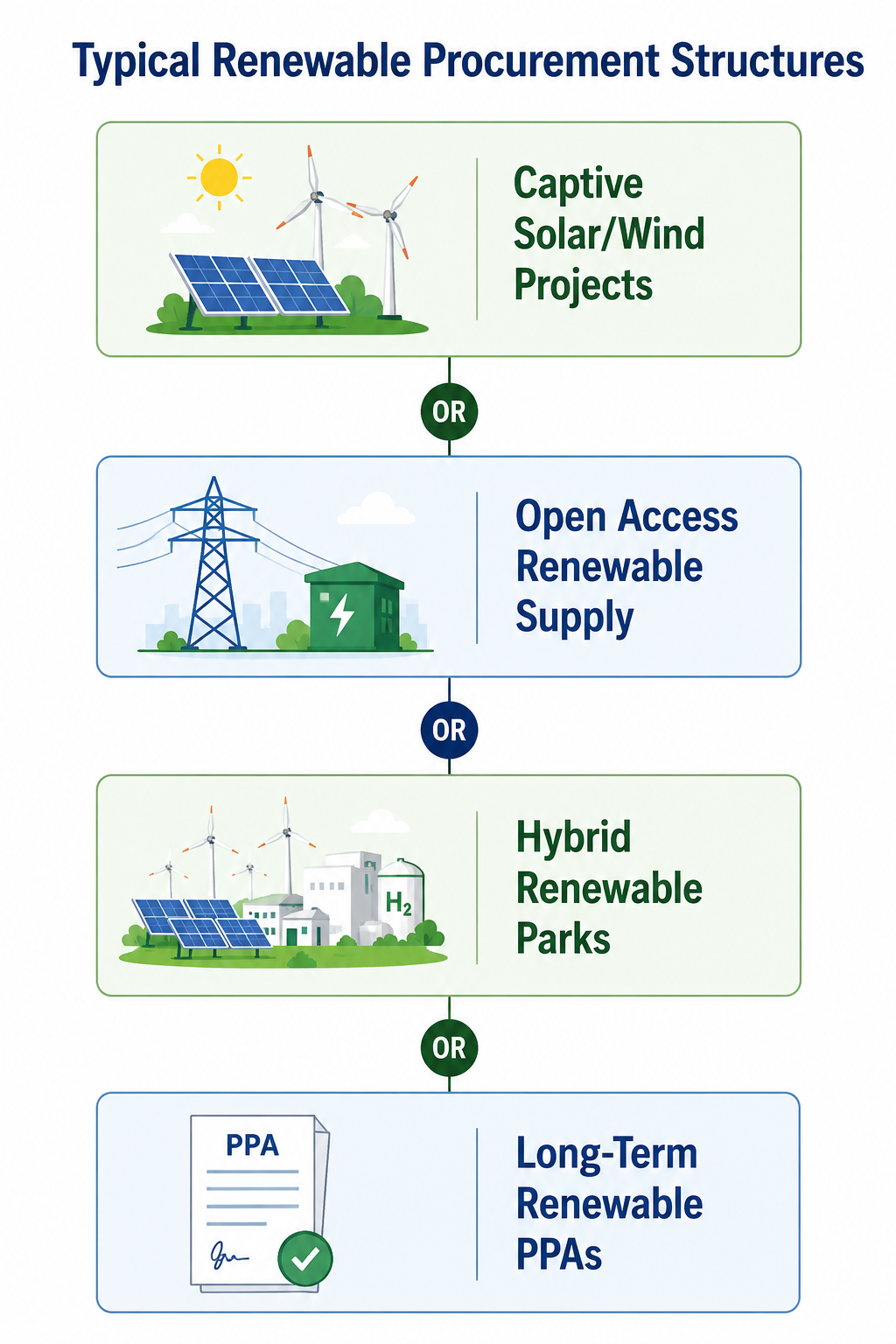
Key Legal Risks in Renewable Integration
| Risk Area | Investor Concern |
| Curtailment risk | Interruption in renewable supply |
| Open access charges | Regulatory unpredictability |
| Transmission bottlenecks | Project delays and operational inefficiency |
| Grid instability | Reduced electrolyser efficiency |
| Renewable intermittency | Production inconsistency |
For lenders, renewable supply reliability directly affects debt sizing and long-term cash flow modelling.
Water Rights: The Most Underestimated ESG Risk in Green Hydrogen
Much of the global discussion around hydrogen focuses on carbon reduction. However, in India, water availability may become the defining ESG issue for large-scale hydrogen infrastructure.
Electrolysis requires substantial water resources, creating potential legal and social risks in water-stressed regions.
Water Compliance Framework
Groundwater Extraction Approval
↓
Environmental Clearance
↓
Pollution Control Consent
↓
Water Allocation Permissions
↓
Local Sustainability Compliance
Emerging Investor Concerns
- Groundwater depletion
- Community opposition
- Competing industrial usage
- Climate-related water stress
- Sustainability reporting obligations
Institutional investors increasingly assess whether hydrogen projects merely shift environmental pressure from carbon emissions to water consumption.
Electrolyser Technology Risk: The Core Financing Challenge
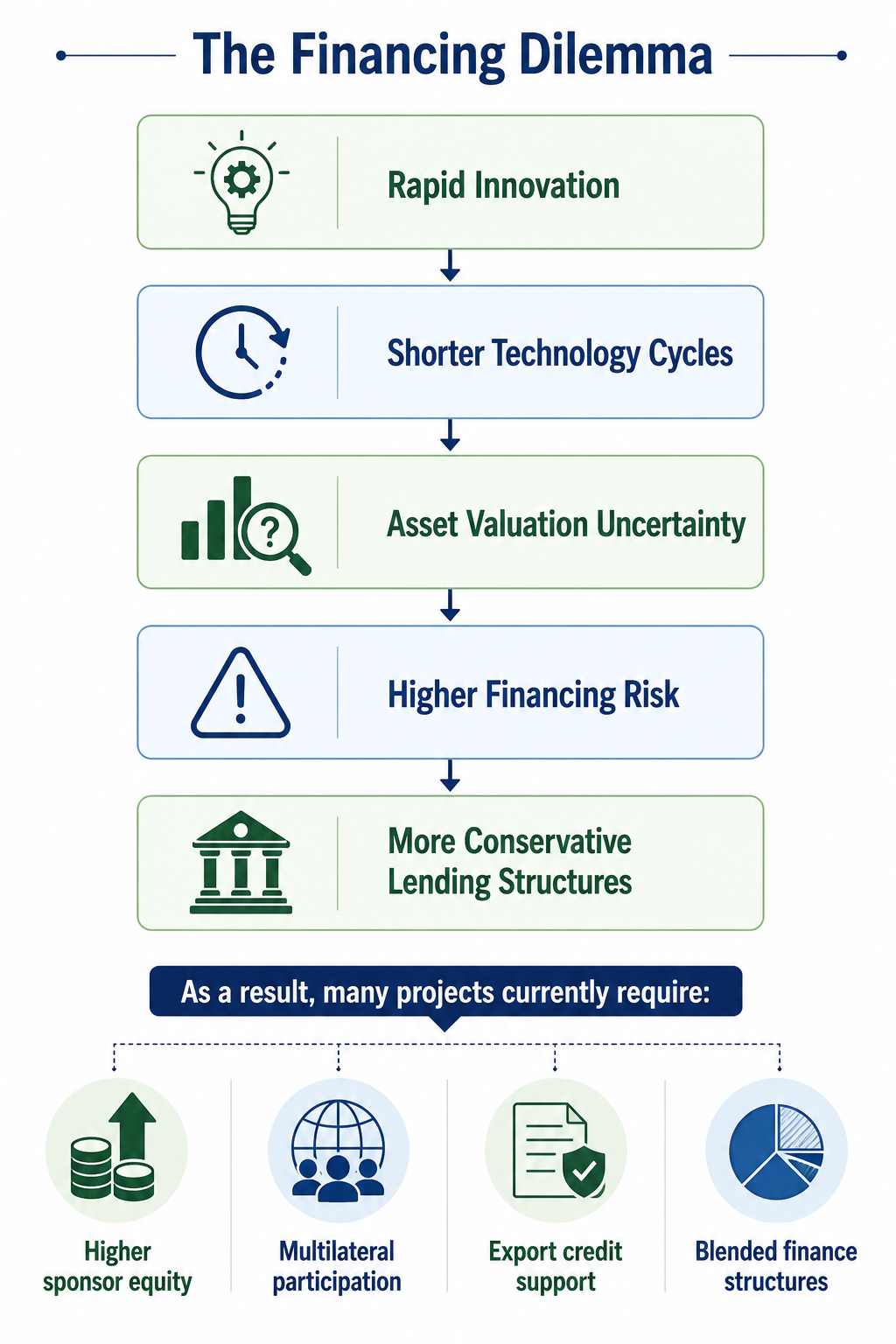
Unlike solar and wind infrastructure, hydrogen technology remains relatively immature from a project finance perspective. This creates significant lender caution.
Why Technology Risk Matters
Lenders and infrastructure investors evaluate:
| Financing Concern | Why It Matters |
| Technology maturity | Determines operational predictability |
| Manufacturer reliability | Impacts maintenance and warranty exposure |
| Efficiency degradation | Affects long-term project economics |
| Obsolescence risk | Rapid innovation may reduce competitiveness |
| Residual asset value | Critical for recovery analysis |
Project Finance Structures for Green Hydrogen Projects in India
Green hydrogen projects are gradually evolving toward complex infrastructure-style financing structures. However, unlike mature renewable projects, hydrogen financing still lacks fully standardised bankability models.
Typical Financing Structure
Sponsors / Investors
↓
Special Purpose Vehicle (SPV)
↓
Project Finance Lenders
↓
Security Package Creation
↓
Hydrogen Production Assets
↓
Offtake Revenues
Typical Security Package
| Security Instrument | Purpose |
| Mortgage over land | Asset security |
| Charge over equipment | Collateral for lenders |
| Assignment of offtake contracts | Revenue protection |
| Charge over bank accounts | Cash flow control |
| Share pledge | Sponsor-level enforcement |
| Insurance assignment | Risk mitigation |
Offtake Agreements: The Most Important Bankability Component
Hydrogen demand is still developing globally. Consequently, lenders remain heavily dependent on long-term offtake arrangements to establish project viability.
Common Offtake Structures
| Offtake Model | Typical Counterparty |
| Industrial hydrogen supply | Steel and chemical manufacturers |
| Green ammonia conversion | Export processors |
| Export contracts | International buyers |
| Energy transition partnerships | Industrial decarbonisation platforms |
Why Offtake Risk Matters
Without long-term buyers:
- Revenue projections become speculative
- Debt sizing becomes difficult
- Cash flow certainty weakens
- Bankability deteriorates significantly
This makes offtake agreements the central pillar of hydrogen project finance.
FEMA and Foreign Investment Considerations
India’s hydrogen sector is expected to attract substantial foreign direct investment and cross-border financing activity. However, hydrogen projects often involve layered international structures that require careful FEMA analysis.
Common Cross-Border Structures
- Foreign Investor
Indian Holding Company
Project SPV
Renewable + Hydrogen Assets
FEMA Compliance Issues
| Regulatory Area | Key Concern |
| FDI compliance | Sectoral entry conditions |
| Pricing guidelines | Share issuance and exits |
| External commercial borrowings | Offshore debt structures |
| Security creation | Enforcement rights for foreign lenders |
| Repatriation | Dividend and exit mechanisms |
Projects involving strategic infrastructure and export-linked operations may also attract enhanced governmental scrutiny.
RBI Project Finance Directions 2025: Impact on Hydrogen Financing
The RBI’s evolving project finance framework is expected to materially influence hydrogen infrastructure lending. Technology-intensive projects are now subject to increased scrutiny from lenders and regulators.
Enhanced Monitoring Requirements
| Regulatory Focus | Impact on Hydrogen Projects |
| Milestone-linked disbursements | Greater implementation oversight |
| Independent engineer monitoring | Enhanced technical diligence |
| Construction supervision | Higher compliance burden |
| Stress testing | Conservative financial modelling |
| Operational monitoring | Continuous lender oversight |
Hydrogen projects may therefore face stricter due diligence standards than conventional renewable assets.
ESG Compliance and Greenwashing Risks
Hydrogen projects are marketed as climate-positive infrastructure assets. However, ESG scrutiny increasingly extends beyond headline emissions claims.
Modern ESG Due Diligence Focus
- Renewable Energy Traceability
- Water Sustainability
- Supply Chain Integrity
- Lifecycle Carbon Accounting
- Independent Verification
Investor Concerns in 2026
- Whether electricity is genuinely renewable
- Lifecycle emissions accounting
- Land use impact
- Community displacement concerns
- Carbon reporting accuracy
- Supply chain sustainability
As international ESG frameworks tighten, greenwashing allegations may become a major litigation and reputational risk area.
Export Infrastructure and Global Regulatory Alignment
India’s hydrogen ambitions are strongly export-oriented. This creates additional legal complexity linked to international trade and sustainability standards.
Export Infrastructure Requirements
| Infrastructure Component | Importance |
| Port terminals | Export logistics |
| Hydrogen storage systems | Operational continuity |
| Conversion facilities | Ammonia export integration |
| Transportation corridors | Supply chain connectivity |
International Regulatory Challenges
Developers must increasingly consider:
- Carbon Border Adjustment Mechanisms (CBAMs)
- EU sustainability certification
- International traceability standards
- Carbon intensity verification
- Cross-border emissions reporting
Future export competitiveness may depend as much on regulatory compliance as production capacity.
Insolvency and Distressed Hydrogen Assets
As the sector matures, distressed asset scenarios are likely to emerge. Hydrogen infrastructure insolvencies may become highly specialised due to the technological and operational nature of the assets involved.
Potential Distress Triggers
- Technology Failure
- Revenue Instability
- Operational Inefficiency
- Debt Servicing Stress
- IBC Proceedings / Restructuring
The Insolvency and Bankruptcy Code, 2016 may increasingly be used for:
- Strategic acquisitions
- Sponsor replacement
- Infrastructure consolidation
- Distressed energy platform transactions
The Biggest Risks Investors Must Evaluate in 2026
Comprehensive Hydrogen Investment Risk Matrix
| Risk Category | Severity |
| Technology obsolescence | High |
| Water availability | High |
| Offtake uncertainty | High |
| Regulatory evolution | Medium to High |
| Export market volatility | Medium |
| ESG litigation risk | Medium |
| Renewable integration challenges | High |
| Supply chain disruption | Medium |
Green hydrogen remains one of the highest-potential yet highest-complexity infrastructure sectors in India today.
The Future of Green Hydrogen in India
Over the next decade, India’s hydrogen ecosystem is expected to evolve into an integrated industrial and export infrastructure platform. Future growth is likely to involve:
- Hydrogen industrial corridors
- Integrated renewable-hydrogen clusters
- Green steel ecosystems
- Ammonia export hubs
- Cross-border climate partnerships
- Large-scale infrastructure platforms
The sector may eventually become one of the defining pillars of India’s energy transition economy.
Conclusion
Green hydrogen is no longer merely an experimental clean-energy initiative. It is rapidly becoming a strategically important infrastructure and industrial asset class shaping the future of global decarbonisation finance. India’s combination of renewable energy capacity, policy support, industrial demand and export ambition places it at the centre of the emerging hydrogen economy.
However, successful investment in the sector requires careful navigation of:
- Energy regulation
- Water rights and ESG compliance
- Technology risk allocation
- Project finance structuring
- Offtake bankability
- Cross-border investment frameworks
- International trade standards
For investors, lenders and infrastructure developers, the next phase of growth will depend not only on policy incentives, but on the ability to create legally resilient, technologically sustainable and financially bankable project structures.
Last Updated on 18 May, 2026

By entering the email address you agree to our Privacy Policy.