
Delhi High Court Examines Scope of Trademark Rights in Cross-Category Use: Kent RO Systems Ltd. v. Kent Cables Pvt. Ltd.
Summary
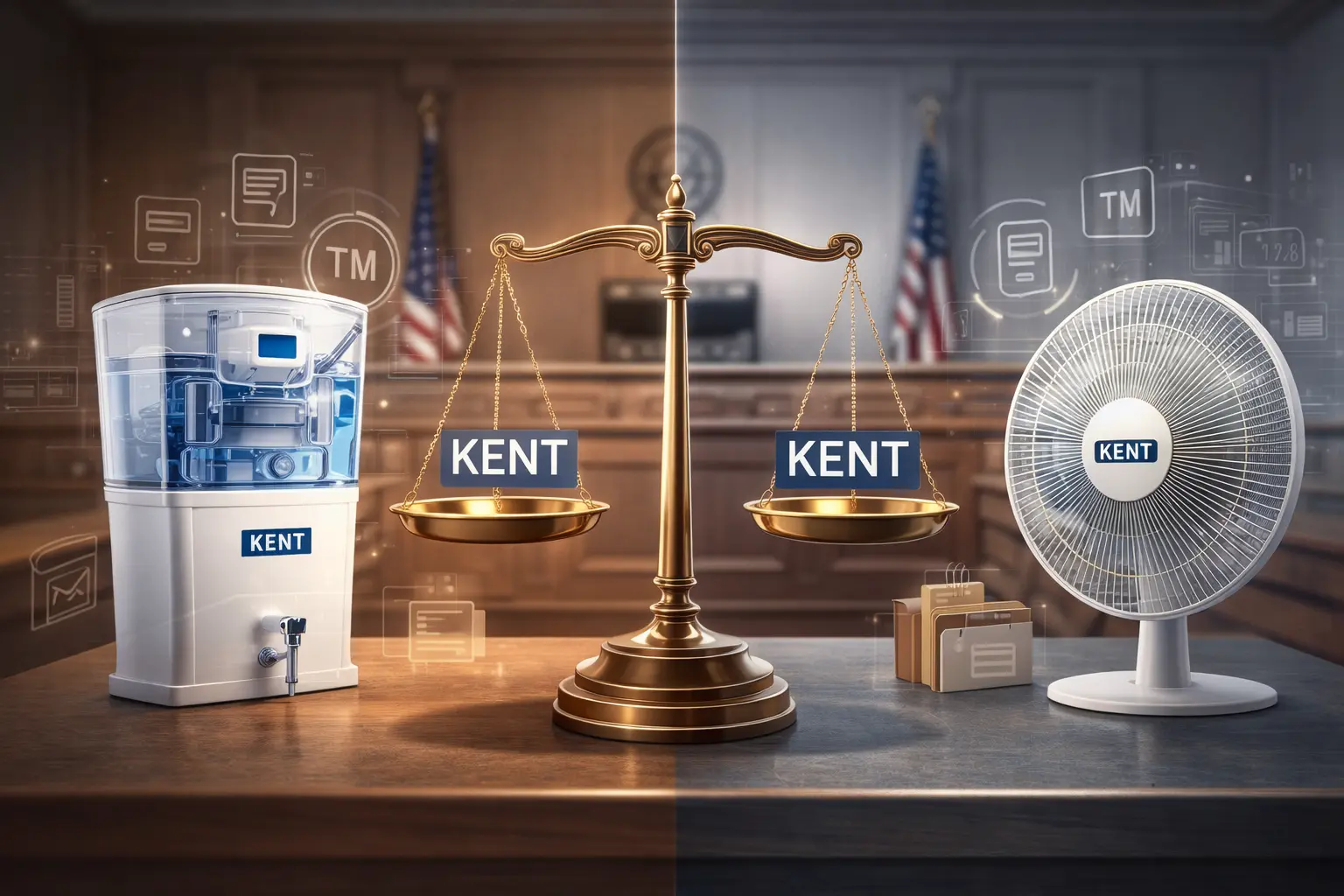
In a significant ruling addressing cross-category trademark use and competing claims to identical marks, the Delhi High Court considered appeals arising from an interim order in the dispute between Kent RO Systems Limited and Kent Cables Private Limited regarding the use of the trademark “KENT” for electrical fans and related products.
The Division Bench examined whether the Single Judge was justified in restraining Kent RO Systems from using the mark “KENT” for fans while allowing Kent Cables to continue using the mark in the same product category. The Court analysed the scope of trademark protection, the relevance of prior adoption and goodwill, and the correct approach to granting interim injunctions in trademark disputes.
Holding that the interim arrangement created an imbalance between the parties, the Court modified the impugned order and emphasised that courts must ensure equitable interim relief where competing claims to the same mark exist.
Table of Contents
Facts of the Case
Kent RO Systems Limited is a well-known Indian company engaged in the manufacture and sale of water purifiers, kitchen appliances, air purifiers, and other consumer products under the trademark “KENT.” The company asserted that it had built substantial goodwill and reputation in the mark through extensive commercial use, large-scale advertising, and widespread consumer recognition across India.
The mark “KENT” has been used by the company for several years in connection with its consumer appliances, and the company claimed statutory as well as common-law rights in the mark. Over time, the brand expanded its product portfolio to include various household electrical appliances.
Kent Cables Private Limited, on the other hand, operates in the electrical products industry and is engaged in the manufacture and sale of wires, cables, and electrical accessories. The dispute arose when the parties began asserting rights over the use of the mark “KENT” in relation to electric fans, with both sides claiming entitlement to use the mark for such goods.
Litigation was initiated when each party alleged that the other’s use of the mark in relation to fans amounted to trademark infringement and passing off. The matter initially came before a Single Judge of the Delhi High Court, who passed an interim order addressing the competing claims.
By the impugned order, the Single Judge refused to restrain Kent Cables from using the mark “KENT” for fans but restrained Kent RO Systems from manufacturing or selling fans under the same mark during the pendency of the suit.
Kent RO Systems challenged this order before the Division Bench, arguing that the direction effectively granted exclusive interim rights to the defendant in the disputed product category, thereby prejudicing the plaintiff’s commercial interests before the final adjudication of the case.
Issues before the Court
- Whether the Single Judge was justified in restraining Kent RO Systems from using the mark “KENT” for electric fans while allowing Kent Cables to continue such use.
- Whether the competing claims of the parties to the mark “KENT” in relation to fans required a balanced interim arrangement pending trial.
- Whether the principles governing grant of interim injunctions in trademark disputes namely prima facie case, balance of convenience, and irreparable harm, had been correctly applied.
Findings of the Court
The Division Bench undertook a detailed examination of the commercial activities, trademark rights, and the historical use of the mark by both parties.
The Court noted that Kent RO Systems had built significant reputation and goodwill in the “KENT” brand, particularly in the market for household appliances and consumer products. At the same time, Kent Cables had also been operating in the electrical goods sector and claimed rights to use the mark in relation to its products.
The Court emphasised that the dispute concerned use of an identical mark in a specific product category electric fan, which required careful examination of the parties’ respective rights. Such determination, the Court observed, would necessarily involve detailed evidence and factual analysis, which could only be undertaken during trial.
At the interim stage, the Court reiterated that relief must be guided by the established principles governing injunctions. These principles require the Court to assess: (a)whether a prima facie case exists; (b) where the balance of convenience lies; and (c) whether refusal of relief would cause irreparable injury.
The Division Bench observed that the Single Judge’s order created an unequal situation between the parties by restraining one party from using the mark while permitting the other to continue doing so. Such an approach, according to the Court, effectively conferred a commercial advantage on one party at the interim stage, without a full determination of the competing trademark rights.
The Court therefore held that the interim arrangement required reconsideration so that the rights of both parties could be preserved until the dispute was finally adjudicated.
Decision of the Court
The Division Bench held that the interim order passed by the Single Judge required modification. The Court observed that in disputes involving competing claims to the same trademark, interim relief must be structured in a manner that maintains fairness and does not effectively determine the rights of the parties before trial.
The Court found that the direction restraining Kent RO Systems from manufacturing and selling fans under the mark “KENT”, while allowing Kent Cables to continue using the mark for the same goods, resulted in an inequitable situation. Such an arrangement effectively granted the respondents the benefit of exclusive use in the disputed product segment at the interim stage.
Accordingly, the Court interfered with the impugned order and modified the interim directions so that the competing claims of the parties could be properly examined during the trial without causing undue prejudice to either side.
Conclusion
This decision highlights the complexities that arise in trademark disputes involving identical marks used across overlapping or adjacent product categories. The ruling underscores that courts must exercise caution while granting interim injunctions in such cases to ensure that the interim relief does not effectively decide the dispute in favour of one party.
The judgment also reinforces the principle that equitable interim arrangements are essential in trademark litigation, particularly where both parties claim rights in the same mark and the matter requires detailed adjudication at trial.
Contributed By – Shambhavi Sharma
By entering the email address you agree to our Privacy Policy.