
Madras High Court Upholds Sale of 2.5-Acre Property; Adnan Siddiqui Explains Key Findings
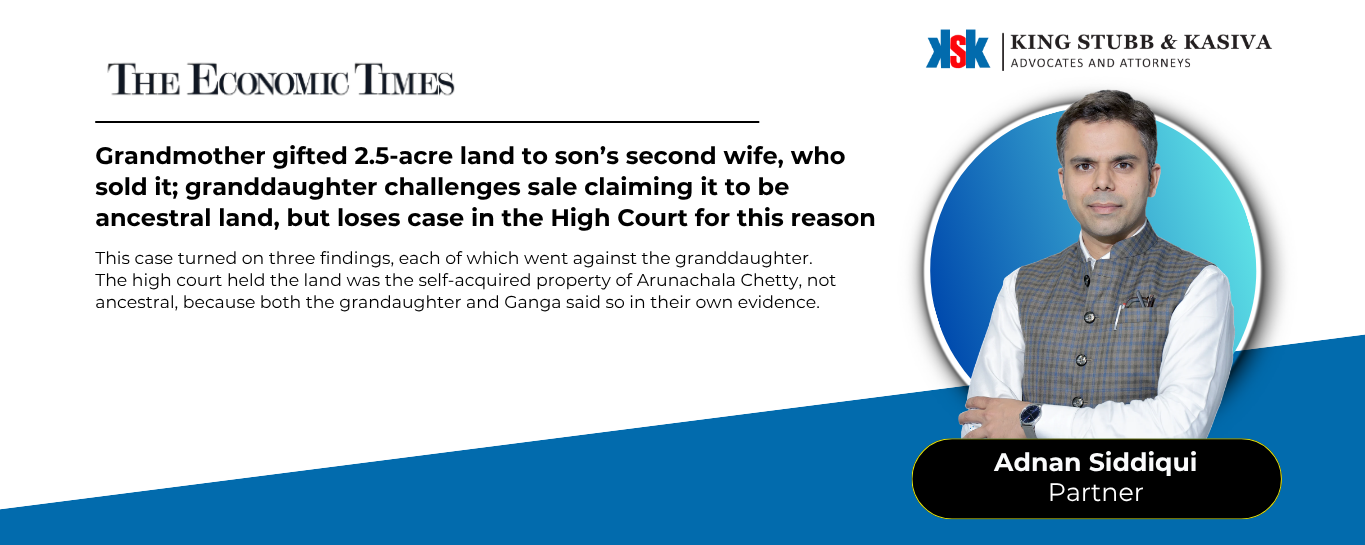
The Madras High Court’s decision upholding the title to a 2.5-acre property has highlighted the importance of establishing whether property is ancestral or self-acquired, as well as the legal effect of testamentary dispositions and subsequent transfers. Adnan Siddiqui commenting to ET Wealth Online, explained that the case turned on three key findings, all of which went against the granddaughter challenging the sale.
According to Adnan, the High Court held that the property was the self-acquired property of Arunachala Chetty and not ancestral property, particularly since both the granddaughter and Ganga had stated so in their evidence. As self-acquired property, it could be freely bequeathed, and the Court interpreted Arunachala Chetty’s Will as giving the property to his son, Veerappa, absolutely and in his individual capacity. Siddiqui further noted that although the Will granted Veerappa’s mother, Unnamalaiammal, a life interest without a power of sale, the Court held that she and Veerappa, as the life-estate holder and remainderman respectively, could together transfer the property.
Siddiqui also pointed out that the granddaughter had admitted execution of the relevant deed, while there was no evidence that Veerappa had challenged it during the 11 years he lived thereafter. Since his widow and daughter derived their claims through him, they could not subsequently challenge the transaction. The Court also found Ganga’s marriage to Veerappa to be proved, while leaving its legal validity open, and upheld Ganga’s subsequent sale of the property to Subburu in 1996. As Siddiqui observed, the property therefore remains with Subburu, with the Madras High Court protecting the title flowing from Ganga and her subsequent buyer.
Last Updated on 5 October, 2026

By entering the email address you agree to our Privacy Policy.