
Vipin Upadhyay Explains How Taxpayers Can Choose Between the New and Old Tax Regimes for ITR Filing 2026
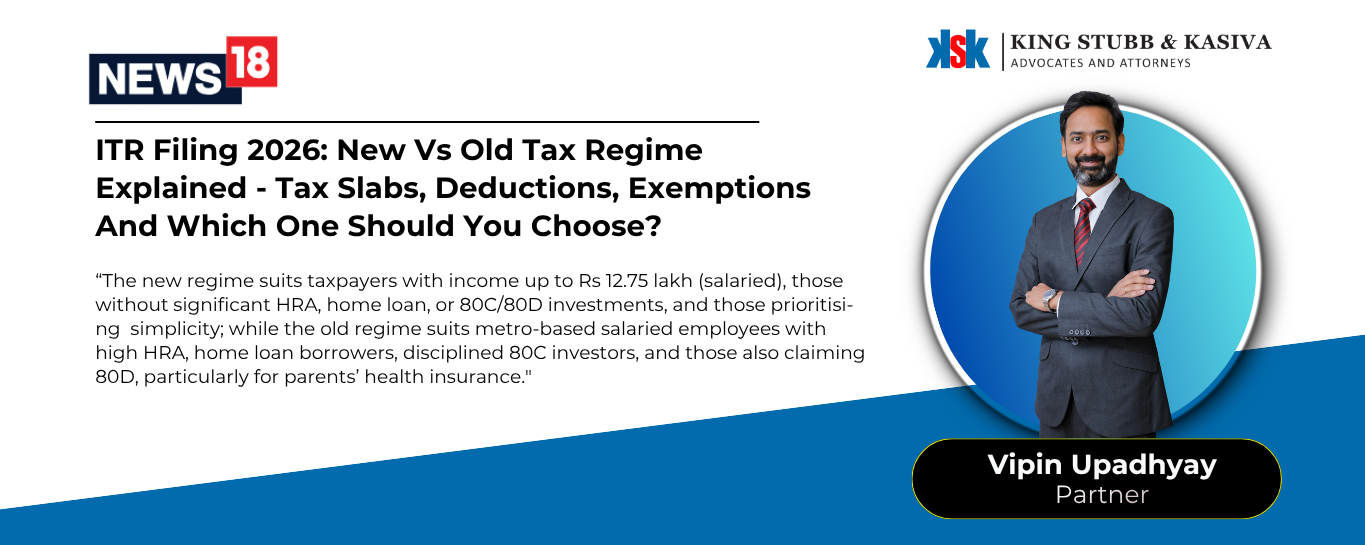
As taxpayers prepare to file their Income Tax Returns (ITR) for Assessment Year 2026–27, choosing between the old and new tax regimes remains one of the most important decisions. In a recent News18 India article, Vipin Upadhyay shared practical guidance on identifying which regime best aligns with a taxpayer’s financial profile and tax-saving strategy.
Commenting on the suitability of each regime, Vipin explained, “The new regime suits taxpayers with income up to Rs 12.75 lakh (salaried), those without significant HRA, home loan, or 80C/80D investments, and those prioritising simplicity; while the old regime suits metro-based salaried employees with high HRA, home loan borrowers, disciplined 80C investors, and those also claiming 80D, particularly for parents’ health insurance.”
He also highlighted that employer contributions to the National Pension System (NPS) continue to receive favourable tax treatment irrespective of the regime chosen. “Employer NPS contributions under Section 80CCD(2) are deductible in both regimes (14% of salary under new, 10% under old) and do not influence the choice,” Upadhyay said.
His comments highlights that the decision between the two tax regimes should be based on an individual’s income structure, eligible deductions and long-term financial planning objectives, rather than a one-size-fits-all approach.
Last Updated on 27 June, 2026

By entering the email address you agree to our Privacy Policy.