
Delhi High Court Confirms Interim Injunction Protecting Shah Namkeen’s ‘HOT MIX’ Mark Against Jabsons Foods
Summary
The Delhi High Court, in Mr. Sunit Shah, Proprietor of M/s. Shah Namkeen v. M/s. Jabsons Foods Pvt. Ltd., confirmed the interim injunction restraining Jabsons Foods from using the mark “HOT MIX” in relation to namkeen, snacks and allied goods. The Court held that the Plaintiff had established a prima facie case of trademark infringement and passing off, observing that the Defendant had adopted the essential feature of the Plaintiff’s registered label.
Facts of the Case
The Plaintiff claimed to have commenced its business in 1977 and adopted the marks SHAH, SHAH NAMKEEN and SHAH HOT MIX in the same year. The Plaintiff was the registered proprietor of the device mark 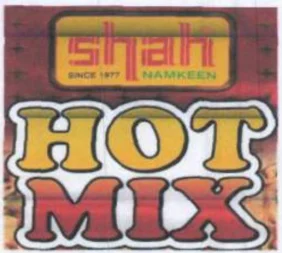 under Registration No. 2309592 in Class 30, pursuant to an application filed on 3 April 2012, claiming use since 1 April 1977. The Plaintiff relied upon invoices, advertisements and sales records to establish use of HOT MIX in relation to namkeen since at least the mid-1990s.
The Defendant commenced using “HOT MIX” for its namkeen products in October 2023. Upon discovering the Defendant’s products during a market survey in the last week of June 2024, the Plaintiff instituted the present suit in July 2024. By an order dated 2 August 2024, the Court granted an ex-parte ad interim injunction. The Defendant subsequently filed an application under Order XXXIX Rule 4 of the Code of Civil Procedure, 1908, seeking vacation of the injunction.
Issue before the Court
Whether the Defendant’s use of “HOT MIX” amounted to infringement and passing off, or whether the expression was descriptive and common to the trade.
Findings of the Court
The Court observed that the disclaimer attached to the Plaintiff’s registration did not, by itself, negate the rights claimed on the basis of longstanding use. It further held that the expression “HOT MIX”, when considered as a whole, was suggestive rather than descriptive in relation to namkeen. The Defendant had failed to establish that the expression was commonly used in the trade or that it had become publici juris.
The Court also rejected the Defendant’s reliance on photographs of third-party packaging, noting the absence of evidence regarding the extent of such use or the market presence of the concerned traders. Mere instances of third-party use were insufficient to establish that the expression was common to the trade.
On comparing the rival labels, the Court found that “HOT MIX” constituted the dominant feature of both, appearing prominently in large and bold lettering, with the respective house marks placed above it in comparatively smaller lettering (Plaintiff – 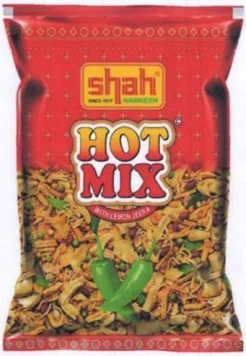 ; Defendant –
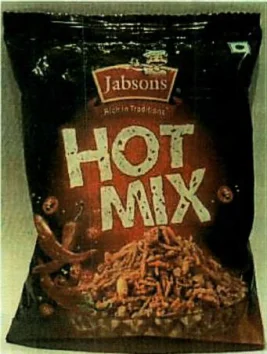 ). The differences in colour scheme and packaging, as well as the addition of the house mark “JABSONS”, did not overcome the similarity arising from the adoption of the essential feature of the Plaintiff’s registered mark.
The Court further held that the defence under Section 30(2)(a) of the Trade Marks Act, 1999, was unavailable, since the Defendant was using “HOT MIX” as the name and mark of its product, rather than merely describing its characteristics. Accordingly, the Court found a prima facie likelihood of confusion and infringement under Section 29(2)(b) of the Act, in addition to a prima facie case of passing off.
Held
The Court confirmed the interim injunction dated 2 August 2024, allowed the Plaintiff’s application under Order XXXIX Rules 1 and 2 CPC, and dismissed the Defendant’s application under Order XXXIX Rule 4 CPC.
The Defendant was restrained, until final adjudication of the suit, from manufacturing, selling, advertising or otherwise dealing in namkeen, snacks or allied and cognate goods under “HOT MIX” or any mark or label identical or deceptively similar to the Plaintiff’s registered mark. The Court clarified that the Defendant could continue using its house mark “JABSONS” and the individual words “hot” or “mix” in their ordinary descriptive sense, provided that the expression “HOT MIX”, or any deceptively similar expression, was not used as a name, mark or label for its goods.
Conclusion
The decision reiterates that the descriptiveness of a composite expression must be assessed as a whole and that a plea of common-to-trade use must be supported by evidence of actual market use and its extent. The Court’s findings, however, were expressly confined to the prima facie determination of the interim applications and remain subject to final adjudication of the suit.
Last Updated on 19 November, 2026

By entering the email address you agree to our Privacy Policy.