
Character Merchandising and Licensing in India: Protecting Fictional Characters and Real Personas Across Copyright, Trademark and Publicity Rights
Summary
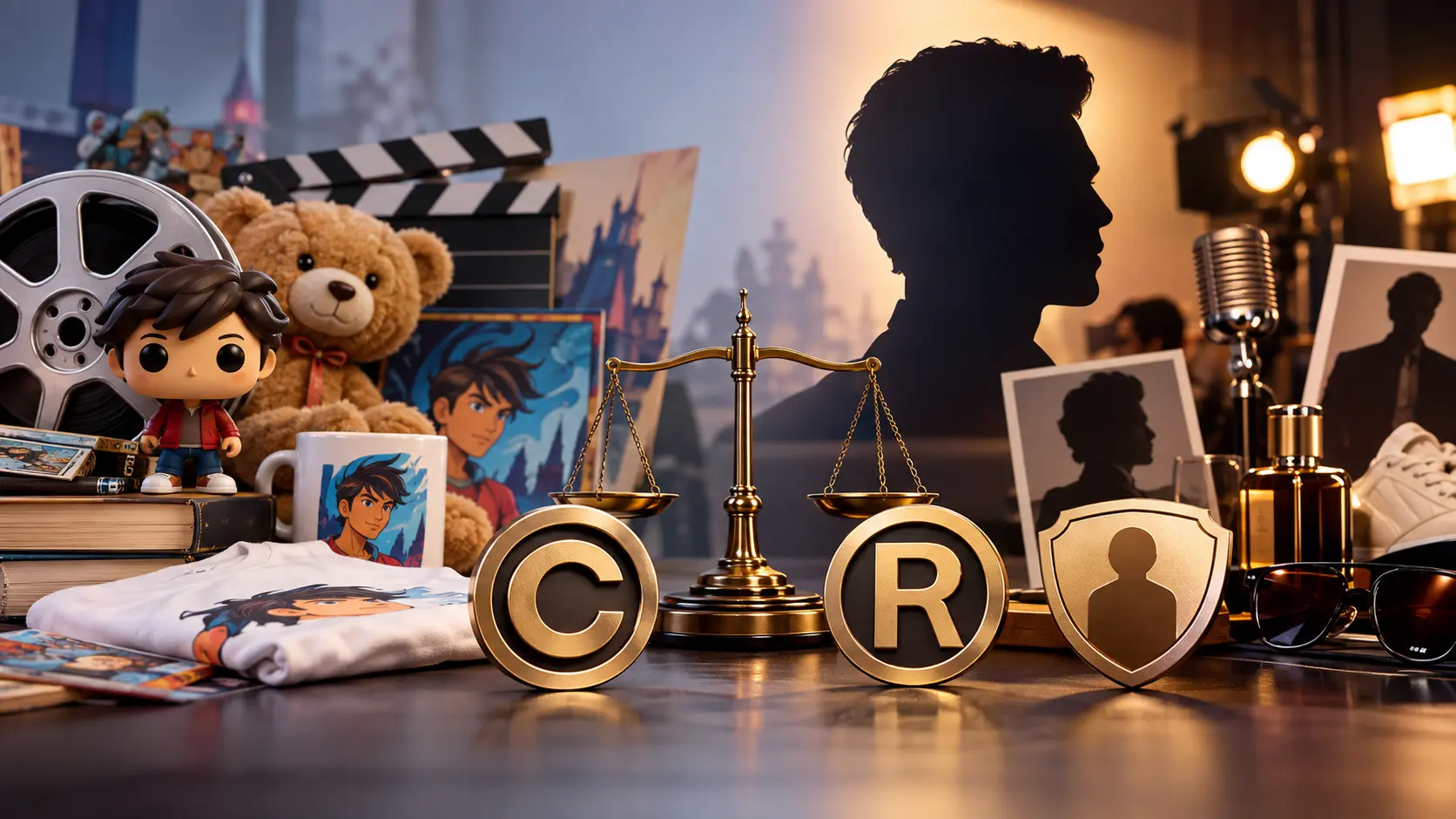
Character merchandising i.e. the commercial exploitation of a fictional character or a real individual’s identity through goods and services, sits at the intersection of three distinct Indian legal regimes: copyright law, trademark law, and the largely judge-made doctrine of personality and publicity rights. India does not have a dedicated statute governing personality rights or a separate statutory framework specifically regulating character merchandising. Instead, protection has developed through existing intellectual property laws and judicial decisions.
This article examines how Indian courts protect fictional characters and real personas, the character licensing and celebrity licensing structures typically used to commercialise them, and the legal remedies available against unauthorised merchandise and other forms of commercial exploitation.
Introduction: Two Distinct but Related Problems
Character merchandising in the Indian context covers two related but analytically distinct situations. The first is the commercial exploitation of a fictional character such as a cartoon figure, film character or mascot, where protection may be anchored in copyright in the underlying artistic or literary work and trademark protection for character names, logos, devices or other distinctive identifiers, where applicable.
The second is the commercial exploitation of a real individual’s persona including a celebrity’s name, image, likeness, voice, mannerisms or other distinctive attributes where protection has developed principally through judicial recognition of personality and publicity rights, alongside causes of action such as passing off, trademark law, copyright and privacy principles.
The distinction is commercially significant because the rights available to a character owner, copyright owner, trademark proprietor, celebrity or licensee may differ depending on the particular attribute being exploited and the manner in which it is used.
Protecting Fictional Characters
Copyright protection for a fictional character in India generally arises through the copyright subsisting in the original artistic or literary work in which the character is expressed, including its visual depiction where it qualifies as an artistic work. The precise scope of protection depends on the nature of the work and the elements alleged to have been copied.
Indian courts have recognised the commercial significance of fictional characters in the context of character merchandising and character licensing. In Disney Enterprises, Inc. v. Pankaj Aggarwal, the Delhi High Court described the use of Disney’s “Lightning McQueen” character on chocolate wrappers as a classic case of character merchandising and observed that characters can acquire trademark as well as copyright protection. The Court also referred to the earlier decision in Star India Pvt. Ltd. v. Leo Burnett (India) Pvt. Ltd., which recognised character merchandising as the exploitation of fictional characters or celebrity fame through licensing.
Similarly, in Disney Enterprises Inc. v. Santosh Kumar, the Delhi High Court dealt with unauthorised merchandise bearing Disney’s characters and found that the plaintiffs had established rights in their trademarks and copyright-protected characters, including “Hannah Montana”, “Donald Duck”, “Mickey Mouse” and “Winnie the Pooh”. The Court also found a strong association between the characters, their names and devices and the plaintiffs’ goodwill.
Trademark protection can supplement copyright protection where a character’s name, logo, device or other distinctive element is registered or otherwise protected as a trademark. This enables the rights holder to address unauthorised use that may constitute trademark infringement, passing off or dilution, depending on the facts and the rights relied upon.
In practice, rights holders in commercially successful fictional characters may therefore pursue copyright protection and trademark protection simultaneously. Copyright protects qualifying original expression, while trademark law can protect the character’s name, logo, device or other distinctive identifier when it functions as a source indicator and satisfies the requirements of trademark law.
The commercial value of the character is consequently not limited to the original film, programme, book or other work in which it appears. Once a character acquires independent recognition, it may become capable of being commercially licensed for products such as apparel, toys, stationery, food packaging, accessories and other merchandise.
Protecting Real Personas: The Judge-Made Doctrine of Publicity Rights
Protection for real individuals’ personas has developed along a different legal track. Neither the Copyright Act, 1957 nor the Trade Marks Act, 1999 creates a standalone statutory “personality right” in the manner of a dedicated publicity-rights statute. Indian courts have instead developed protection through a combination of privacy, publicity, passing off, intellectual property and related principles.
An early and frequently cited decision is ICC Development (International) Ltd. v. Arvee Enterprises1, where the Delhi High Court observed that the right of publicity evolves from the right of privacy and can inhere in an individual or indicia of an individual’s personality, such as their name, personality traits, signature or voice. The Court also rejected the proposition that publicity rights inhere in a non-human entity merely because an event has commercial value.
The doctrine was further developed in D.M. Entertainment Pvt. Ltd. v. Baby Gift House2, where the Delhi High Court dealt with dolls resembling singer Daler Mehndi. The Court recognised the commercial appropriation of an individual’s persona and held that the unauthorised commercial use of the celebrity’s identity could give rise to a claim for infringement of publicity rights and passing off. At the same time, the Court cautioned against an overbroad conception of publicity rights that could interfere with freedom of speech, recognising that legitimate forms of expression such as caricature, parody and commentary may require protection.
The decision in Titan Industries Ltd. v. Ramkumar Jewellers3 further developed the commercial dimensions of publicity rights. The case concerned the unauthorised use of photographs of Amitabh Bachchan and Jaya Bachchan in advertisements after their endorsement arrangement with Titan. The Court recognised the right to control the commercial use of a person’s identity and considered whether the celebrity was identifiable and whether the defendant had appropriated the commercial value of that identity.
The distinction between publicity rights and passing off is important. A publicity-rights claim is concerned with unauthorised commercial appropriation of a person’s identity, whereas passing off ordinarily involves the additional question of misrepresentation and damage to goodwill. Courts have therefore recognised that these causes of action may operate alongside one another rather than being treated as identical claims.
Personality Rights and Celebrity Licensing in the Digital and AI Era
Since 2023, Indian personality-rights jurisprudence has increasingly addressed digital forms of commercial exploitation, including AI-generated images, deepfakes, voice manipulation, GIFs, online merchandise and other forms of unauthorised digital content.
In Anil Kapoor v. Simply Life India4, the Delhi High Court considered the unauthorised use of the actor’s name, image, likeness, voice, manner of speaking and other personality attributes. The Court granted interim protection against, among other things, unauthorised merchandise and the use of technological tools including artificial intelligence, machine learning, deepfakes, face morphing and GIFs for commercial purposes.
More recent Delhi High Court decisions have continued to recognise protection against unauthorised commercial exploitation of names, images, voices and other distinctive personality attributes. In Jaikishan Kakubhai Saraf alias Jackie Shroff v. The Peppy Store, the Court recognised the protection available against unauthorised use of a celebrity’s name, image, voice and other distinctive attributes and granted interim relief.
The developing jurisprudence is particularly relevant for celebrity merchandising agreements and personality-rights licensing agreements, because a licence drafted only around physical merchandise or conventional advertising may not adequately address AI generated content, voice cloning, digital avatars, synthetic images or other emerging technologies.
Character Licensing Agreements, Celebrity Licensing and Commercial Structuring
Character and persona licensing arrangements in India typically follow a broadly similar commercial architecture, regardless of whether the underlying right relates to a fictional character or a real individual’s persona.
A character licensing agreement or celebrity licensing agreement should define the licensed rights precisely. Depending on the transaction, this may include specific artwork, character names, trademarks, photographs, approved likenesses, voice recordings, catchphrases or other identified attributes.
The agreement should also clearly define the permitted products, territories, distribution channels, marketing activities and duration of the licence. The licensee may be granted rights to affix a character or persona to specified categories of goods, while the licensor retains approval rights over artwork, packaging, advertising and other creative execution.
Such approval mechanisms are commercially significant because uncontrolled use may affect the goodwill, reputation or commercial value associated with the underlying character or persona, even where the licensee is otherwise authorised to use the relevant IP.
A well-structured IP licensing agreement should therefore address, among other matters:
- scope of licensed intellectual property;
- exclusive, non-exclusive or limited exclusivity rights;
- permitted products and services;
- territory and distribution channels;
- term and renewal;
- sublicensing rights;
- quality-control and brand guidelines;
- prior approval of artwork and advertising;
- minimum sales or performance obligations;
- royalty calculation and reporting;
- audit rights;
- guaranteed or minimum royalty payments;
- intellectual property ownership;
- representations and warranties;
- indemnities;
- infringement enforcement;
- termination rights; and
- post-termination use and sell-off of existing inventory.
Royalty Structures and Minimum Guarantees
Royalty structures for merchandise licensing commonly combine a running royalty calculated as a percentage of sales with a guaranteed minimum royalty or minimum guarantee. The precise definition of the royalty base is particularly important. A licensing agreement should specify whether the royalty is calculated on gross sales, net sales, net receipts or another agreed basis, and should clearly identify permitted deductions.
A minimum guaranteed royalty may protect the licensor against underperformance by a licensee that has obtained exclusive or semi-exclusive rights. The agreement should also address payment schedules, sales reporting, audit rights, withholding taxes where applicable and the consequences of failing to meet minimum commercial commitments.
For celebrity endorsement or persona licensing, the agreement should additionally specify exactly which elements of the celebrity’s identity are being licensed. For example, a licence may cover a person’s name and approved photographs for specified merchandise but not their voice, signature, personal social-media accounts, film footage or AI-generated digital likeness.
Termination and Post-Termination Rights
Termination and post-termination provisions are particularly important in character licensing agreements and celebrity merchandising agreements. The Titan Industries dispute demonstrates the legal risks associated with continued commercial use of a celebrity’s identity after the relevant contractual arrangement has ended. The dispute involved the continued commercial use of celebrity imagery in advertising and also raised questions concerning the rights granted under the underlying endorsement arrangement.
A carefully drafted licensing agreement should therefore specify:
- the exact date on which the licence expires or terminates;
- whether existing inventory may continue to be sold;
- the duration of any sell-off period;
- whether existing advertising materials must be withdrawn;
- when online listings must be removed;
- whether the licensee must destroy or return remaining materials; and
- the consequences of unauthorised post-termination use.
These provisions are particularly important where merchandise is sold through e-commerce platforms, because product listings, promotional images and digital advertising may continue to remain accessible even after physical distribution has ceased.
Enforcement Against Unlicensed Merchandise
Where unauthorised character merchandise or celebrity merchandise appears in the market, rights holders may rely on the legal remedies available under the relevant intellectual property and civil law framework, depending on the rights involved.
For copyright infringement, the Copyright Act, 1957 provides civil remedies including injunctions and other relief. Similarly, trademark owners may seek injunctions and other remedies for trademark infringement and passing off under the Trade Marks Act, 1999.
Depending on the facts, enforcement proceedings may seek:
- interim and permanent injunctions;
- damages;
- rendition of accounts;
- delivery up or destruction of infringing goods and materials;
- restraint against further manufacture or sale;
- takedown of infringing online listings; and
- other appropriate directions against intermediaries or platforms.
Indian courts have also granted John Doe/Ashok Kumar orders in appropriate cases where the identities of infringers are unknown. In digital infringement matters, courts have additionally issued directions concerning specific URLs, websites, domain names and online content.
The developing personality-rights jurisprudence demonstrates how these remedies can extend beyond traditional physical merchandise. In Anil Kapoor v. Simply Life India, for example, the Delhi High Court restrained the defendants from using the plaintiff’s name, likeness, image, voice and other personality attributes to create merchandise and from using AI, machine learning, deepfakes, face morphing and GIFs for commercial purposes.
More recent cases have similarly involved unauthorised celebrity merchandise, e-commerce listings and AI-generated or manipulated content. Courts have continued to grant interim protection where a prima facie case of unauthorised commercial exploitation is established.
Key Contractual Considerations for Character and Persona Licensing
For businesses entering into a character licensing agreement, celebrity licensing agreement or merchandise licensing agreement, the commercial value of the transaction depends significantly on how precisely the licensed rights are defined. Parties should consider whether the licence covers only physical products or also digital merchandise, e-commerce listings, social-media advertising, promotional content, AI-generated adaptations, voice-based products and other emerging uses.
The agreement should also establish clear quality-control standards and approval mechanisms, particularly where the licensed character or persona is strongly associated with a particular brand identity.
From the rights holder’s perspective, robust audit, reporting and enforcement provisions can help monitor unauthorised use and royalty leakage. From the licensee’s perspective, clearly defined rights, representations regarding ownership and authority to license, indemnities and cure periods can help manage the risk of third-party intellectual property claims.
Conclusion
Character merchandising in India operates without a dedicated statute specifically governing fictional-character merchandising or personality-rights licensing. Instead, protection is assembled through copyright, trademark law, passing off and the developing judge-made doctrine of publicity and personality rights.
For fictional characters, the protection available to a rights holder may extend through copyright in qualifying artistic or literary expression and trademark rights in character names, devices and other identifiers. Indian courts have expressly recognised character merchandising as a commercial activity and have protected well-known fictional characters against unauthorised commercial exploitation.
For real personas, Indian courts have developed protection around the unauthorised commercial exploitation of a person’s name, image, likeness, voice and other distinctive attributes. This jurisprudence has expanded beyond traditional advertising and merchandise to encompass AI-generated images, deepfakes, voice-related exploitation and other digital uses.
For rights holders and licensees alike, the practical lesson is that character licensing agreements and celebrity licensing agreements must define the scope of licensed rights with precision, particularly in relation to products, territories, exclusivity, royalties, quality control, termination and post-termination use.
As merchandising increasingly moves across e-commerce, social media and AI-enabled platforms, licensing and enforcement strategies should account not only for conventional physical merchandise but also for digital and technology-enabled forms of commercial exploitation.
- ICC Development (International) Ltd. v. Arvee Enterprises & Anr., (2003) 26 PTC 245 (Del), Delhi High Court; Constitution of India, art. 21 ↩︎
- D.M. Entertainment Pvt. Ltd. v. Baby Gift House & Ors., 2010 SCC OnLine Del 4790, Delhi High Court. ↩︎
- Titan Industries Ltd. v. Ramkumar Jewellers, 2012 SCC OnLine Del 2382, Delhi High Court. ↩︎
- Anil Kapoor v. Simply Life India & Ors., CS(COMM) 108/2023, 2023:DHC:2796 / 2023 SCC OnLine Del 6914, Delhi High Court. ↩︎
Frequently Asked Questions
1. What Is Character Merchandising in India?
2. Is Character Merchandising Protected Under Copyright Law in India?
3. How Can Fictional Characters Be Protected Through Trademarks in India?
4. Can Celebrities Protect Their Name and Likeness From Unauthorized Commercial Use?
Last Updated on 1 October, 2026

By entering the email address you agree to our Privacy Policy.