
From Indian Farms to British Shelves: Can the India–UK FTA Transform Food and Agricultural Trade?
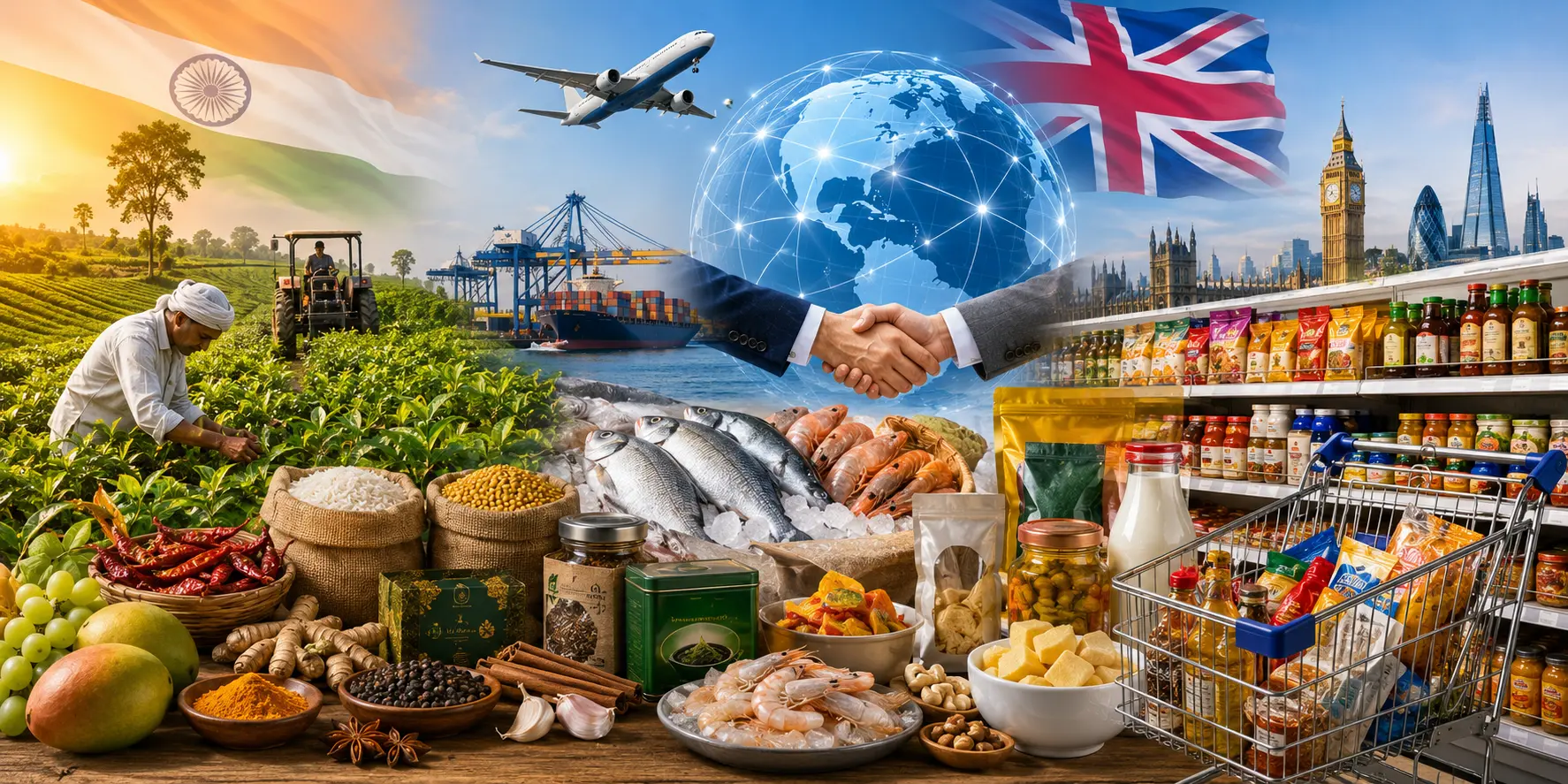
Why Tariff Reductions Are Only the First Step, and How Food Safety, Traceability, Sustainability and Supply Chains Will Determine the Real Winners
The India–UK Comprehensive Economic and Trade Agreement (“CETA” or the “India–UK FTA”) has largely been viewed through the lens of automobiles, textiles, pharmaceuticals and technology. Yet one of the Agreement’s most significant long-term opportunities may lie in a sector that touches every household that is food and agriculture.
This article is part of our India–UK FTA resource hub, covering rules of origin, the contract clauses the agreement puts in play, and sector-by-sector analysis.
India is among the world’s largest producers of agricultural commodities and processed foods. The United Kingdom, meanwhile, is a sophisticated consumer market with strong demand for imported food products, premium ingredients and ethnic cuisine. The growing popularity of Indian food, coupled with the UK’s multicultural consumer base, presents an attractive commercial opportunity for Indian exporters. However, food trade operates differently from most manufactured goods.
A reduction in customs duty may improve pricing, but it does not guarantee market access. Food products remain subject to stringent regulatory controls governing safety, quality, traceability, labelling and import compliance. For food manufacturers, exporters, importers, retailers and investors, the more important question is therefore not: “Has the tariff been reduced?” It is: “Can our products meet the legal, regulatory and commercial requirements necessary to enter and succeed in the UK market?” The businesses that answer this question correctly are likely to derive the greatest value from the India–UK FTA.
Why the India–UK Food Corridor Matters
India possesses one of the world’s most diversified agricultural ecosystems. Its export basket extends far beyond traditional commodities and increasingly includes value-added food products such as:
- spices and seasonings;
- tea and coffee;
- rice;
- seafood;
- processed fruits and vegetables;
- dairy ingredients;
- ready-to-eat meals;
- frozen foods;
- snacks and confectionery;
- nutraceuticals; and
- organic products.
For many Indian companies, exports have historically focused on serving the Indian diaspora. The FTA creates an opportunity to think much bigger.
British consumers are increasingly embracing international cuisines, healthier food choices and premium specialty products. Large retailers continue to diversify sourcing arrangements, creating opportunities for Indian manufacturers that can consistently satisfy quality, compliance and sustainability expectations.
The objective for Indian businesses should therefore not merely be to export more products but should be to build recognised brands within one of the world’s most mature consumer markets.
Tariff Benefits Are Only One Part of the Equation
Preferential tariff treatment undoubtedly improves competitiveness. Lower import duties can reduce landed costs, improve margins and make Indian products more attractive relative to competing suppliers. However, customs treatment represents only one stage of market access. Before any food product reaches supermarket shelves, businesses must satisfy an extensive regulatory framework governing:
- food safety;
- permitted ingredients;
- contaminants;
- pesticide and veterinary residue limits;
- microbiological standards;
- packaging;
- allergen declarations;
- nutritional information;
- traceability; and
- product recalls.
Consequently, a product that qualifies for preferential tariff treatment under the FTA may nevertheless be refused entry if it fails to comply with applicable food safety regulations. Food businesses should therefore integrate customs planning with regulatory compliance from the outset.
Sanitary and Phytosanitary Measures Remain Critical
Sanitary and Phytosanitary (“SPS”) measures are often the most significant legal hurdle for agricultural exports. These measures are designed to protect human, animal and plant health by regulating risks associated with food products, livestock and agricultural commodities. Depending on the product category, exporters may need to demonstrate compliance with requirements relating to:
- plant health;
- pest control;
- animal diseases;
- microbiological contamination;
- heavy metals;
- pesticide residues;
- veterinary drug residues;
- food additives;
- contaminants; and
- inspection protocols.
The India–UK FTA may strengthen regulatory cooperation and improve transparency between the two countries. However, it does not replace the UK’s domestic food safety framework. Businesses should therefore conduct product-specific regulatory assessments before committing to long-term export strategies.
Rules of Origin Could Determine Whether Products Receive Preferential Tariffs
One of the most misunderstood aspects of any free trade agreement is the Rules of Origin. Products do not automatically qualify for preferential tariff treatment simply because they are exported from India. The applicable origin requirements must first be satisfied. This becomes particularly important for processed food manufacturers that source ingredients globally.
A food product manufactured in India using imported ingredients may still qualify for preferential treatment but only if it satisfies the relevant product-specific origin rules. Manufacturers should therefore review:
- sourcing arrangements;
- ingredient origin;
- manufacturing processes;
- tariff classifications; supplier declarations; and
- origin documentation.
Origin compliance should become part of procurement strategy rather than being addressed only at the export stage.
Traceability Is Becoming a Commercial Requirement
Modern food supply chains increasingly demand complete transparency. Major retailers and distributors expect suppliers to demonstrate where ingredients originated, how products were manufactured and whether quality controls were maintained throughout the supply chain.
For many buyers, traceability is a commercial expectation. Businesses should therefore invest in systems capable of documenting:
- supplier information;
- production batches;
- processing records;
- quality assurance;
- transportation;
- storage conditions; and
- recall procedures.
Companies that establish robust traceability systems are likely to enjoy a competitive advantage when negotiating with international retailers.
Sustainability Is Increasingly Influencing Procurement Decisions
Although tariffs may determine initial competitiveness, sustainability increasingly influences purchasing decisions. UK retailers, institutional buyers and multinational food companies are placing greater emphasis on responsible sourcing, environmental performance and ethical supply chains. Indian exporters should therefore prepare for increasing scrutiny regarding:
- sustainable sourcing;
- responsible agricultural practices;
- water management;
- packaging;
- labour standards;
- carbon emissions;
- supply-chain transparency; and
- environmental reporting.
Businesses that proactively address sustainability issues may find themselves better positioned to secure long-term supply agreements.
Branding May Become as Important as Manufacturing
Historically, many Indian food companies have operated as contract manufacturers or suppliers to foreign brands. The India–UK FTA presents an opportunity to move further up the value chain. Rather than merely exporting ingredients or private-label products, Indian businesses may increasingly consider:
- launching proprietary brands;
- partnering with UK distributors;
- acquiring established food businesses;
- entering licensing arrangements;
- establishing UK subsidiaries; or
- developing direct-to-consumer e-commerce strategies.
However, expansion into the UK market also requires careful protection of intellectual property. Businesses should ensure that:
- trademarks are registered;
- branding does not infringe existing rights;
- packaging complies with local requirements; and
- distribution agreements adequately protect commercial interests.
Commercial Contracts Should Be Revisited
The FTA may significantly alter the economics of cross-border food trade. Existing contracts may no longer adequately address issues arising from preferential tariffs and evolving supply chains. Food businesses should review:
- supply agreements;
- distribution contracts;
- agency arrangements;
- logistics agreements;
- pricing mechanisms;
- quality specifications;
- product liability provisions;
- recall obligations;
- indemnity clauses; and
- dispute resolution mechanisms.
Well-drafted contracts can minimise commercial disputes while allocating regulatory and compliance risks appropriately.
Investment Opportunities Extend Beyond Exports
The FTA is also likely to encourage greater investment across the food value chain. Potential opportunities may include:
- food processing facilities;
- cold-chain infrastructure;
- warehousing;
- logistics;
- agri-technology;
- food testing laboratories;
- packaging;
- contract manufacturing; and
- agricultural technology platforms.
Cross-border joint ventures, strategic partnerships and acquisitions may become increasingly attractive as companies seek to strengthen their presence in both markets. For investors, legal due diligence should include regulatory approvals, land issues, environmental compliance, food safety obligations, intellectual property and contractual arrangements.
Looking Ahead
The India–UK FTA has the potential to reshape bilateral food and agricultural trade, but its success will depend on much more than tariff reductions. Companies that view the Agreement purely as a customs benefit may overlook the regulatory, contractual and commercial issues that ultimately determine market success.
The businesses most likely to benefit will be those that combine competitive manufacturing with strong compliance systems, effective traceability, robust intellectual property protection and carefully structured commercial arrangements.
For Indian food companies, the opportunity is no longer confined to exporting products to speciality stores serving diaspora communities. The larger opportunity is to become trusted suppliers and ultimately recognised consumer brands across mainstream British retail channels.
Conclusion
The India–UK FTA marks an important milestone in strengthening agricultural and food trade between two complementary economies. Preferential tariffs may improve competitiveness, but sustainable commercial success will depend on satisfying food safety requirements, complying with Rules of Origin, building resilient supply chains and meeting the increasingly sophisticated expectations of regulators, retailers and consumers.
Businesses that approach the Agreement strategically rather than viewing it solely as a tariff concession will be best positioned to convert improved market access into long-term commercial growth.
For further information or guidance on structuring your food and agriculture export strategy under the India–UK FTA, please reach out to Aayushya Aankul.
Frequently Asked Questions
Does the India–UK FTA automatically reduce tariffs on all food and agricultural exports from India?
What is the difference between Rules of Origin and food safety compliance under the FTA?
What are Sanitary and Phytosanitary (SPS) measures, and why do they matter for Indian food exporters?
Can Indian food products made with imported ingredients still qualify for preferential tariffs under the FTA?
What compliance steps should Indian food exporters prioritise before entering the UK market under CETA?
Last Updated on 26 August, 2026

By entering the email address you agree to our Privacy Policy.