
Constitutionalising Menstrual Dignity: Does Indian Railways Have a Legal Duty to Ensure Menstrual Accessibility?
Introduction
The Indian Supreme Court’s recognition of menstrual health as an element of the rights to dignity, equality and bodily autonomy marks an important development in constitutional jurisprudence. What was historically viewed as a public welfare concern has increasingly been understood as a question of enforceable constitutional rights.
The significance of this shift extends beyond schools and healthcare institutions. It raises a broader public law question: once menstrual dignity is recognised as a constitutional value, how far do the positive obligations of the State extend?
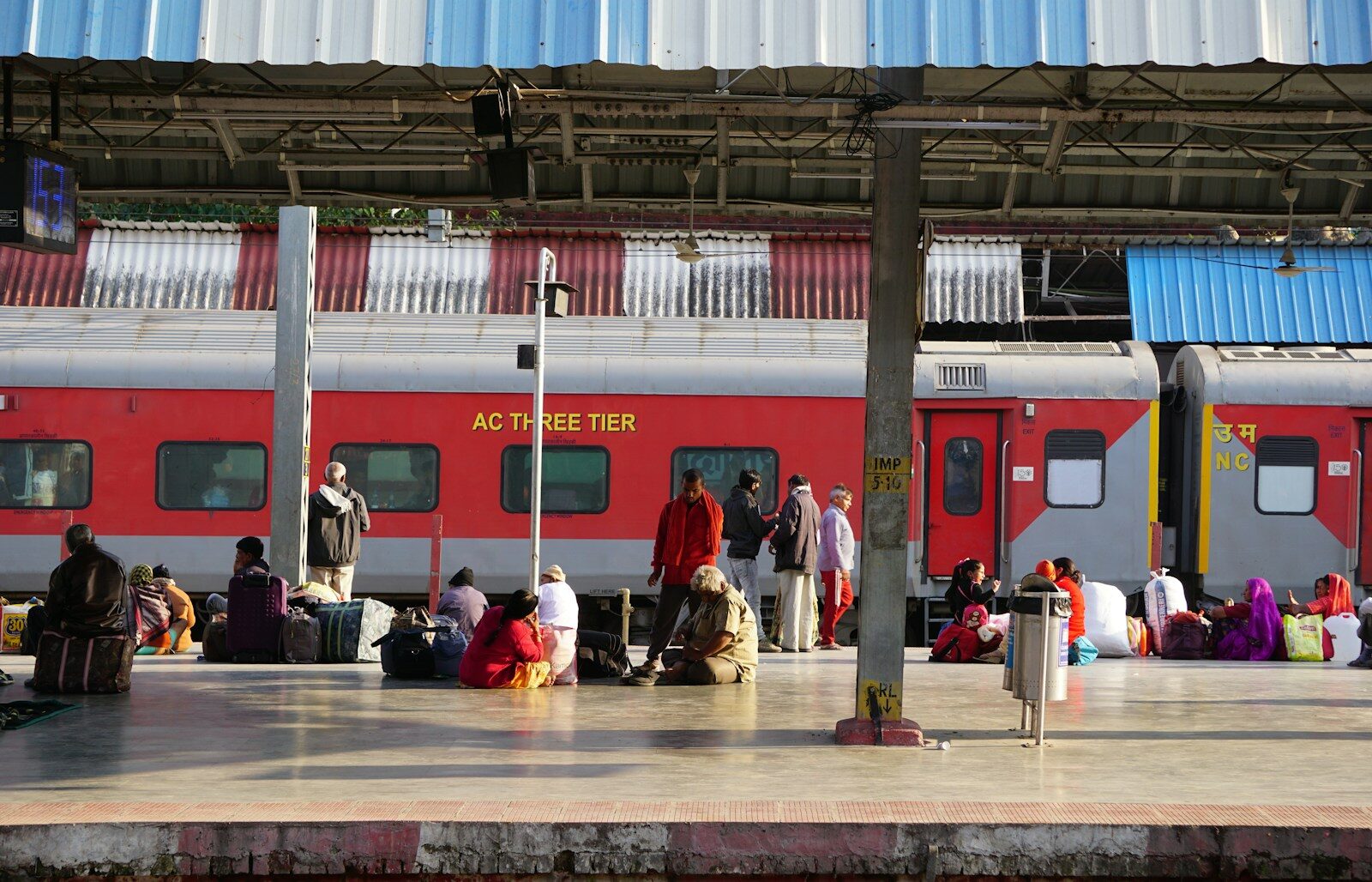
This question assumes particular importance in relation to Indian Railways, the world’s fourth-largest railway network and one of India’s largest public service providers. Millions of women undertake long-distance rail journeys every day, yet access to sanitary products during travel remains largely dependent on personal preparation or sporadic local initiatives rather than any uniform legal framework.
While no statute presently requires Indian Railways to provide menstrual hygiene products, recent constitutional developments invite a larger discussion on whether State instrumentalities owe affirmative obligations to facilitate dignified access to essential menstrual hygiene during public travel.
Rather than examining menstrual health as a social issue, the debate increasingly concerns the scope of constitutional governance and the evolving duties of public authorities.
From Welfare Policy to Constitutional Right
Indian constitutional jurisprudence has steadily expanded the scope of Article 21 beyond mere survival to encompass the right to live with dignity. Judicial interpretation has recognised within Article 21 a wide range of derivative rights, including privacy, reproductive autonomy, health, sanitation, shelter and access to essential public services.
Similarly, Articles 14 and 15 establish substantive equality rather than merely formal equality. Article 15(3), in particular, expressly permits the State to adopt special measures addressing biological realities experienced by women. Such measures are not exceptions to equality but mechanisms for achieving it.
The Supreme Court has repeatedly observed that constitutional equality often requires differential treatment where identical treatment would perpetuate structural disadvantage. Viewed through this framework, menstrual health ceases to be merely a welfare programme and becomes part of the State’s constitutional obligation to create conditions that enable equal participation in public life.
The Significance and Limits of Dr. Jaya Thakur v. Union of India
The constitutional conversation surrounding menstrual health gained considerable momentum through the Supreme Court’s decision in Dr. Jaya Thakur v. Union of India. The litigation arose from concerns regarding inadequate menstrual hygiene facilities in schools and the resulting impact on girls’ education, dignity and health.
Recognising menstruation as an issue affecting constitutional rights rather than merely public welfare, the Court directed implementation of the National Menstrual Hygiene Policy and emphasised access to sanitary products, functional sanitation facilities and awareness measures.
What the Judgment Established
The judgment linked menstrual health with:
- the right to dignity under Article 21;
- equality under Article 14;
- bodily autonomy and privacy; and
- meaningful access to education.
What the Judgment Did Not Decide
However, the judgment is equally notable for what it does not decide. The Court did not create a universal constitutional mandate requiring every State authority to distribute sanitary products. Nor did it specifically address public transport infrastructure or impose obligations upon Indian Railways.
Accordingly, any extension of these principles to railway services must emerge through constitutional interpretation rather than by treating Dr. Jaya Thakur as directly governing public transportation. This distinction is critical from a legal perspective.
Indian Railways as “State” Under Article 12
Indian Railways indisputably falls within the definition of “State” under Article 12 of the Constitution. Consequently, every administrative decision taken by the Railways must satisfy constitutional standards of fairness, reasonableness and non-discrimination.
Unlike private transport providers, Indian Railways performs an essential public function. Its constitutional responsibilities therefore extend beyond operating trains efficiently. They include ensuring that public services are delivered in a manner consistent with fundamental rights.
Indian constitutional law has increasingly recognised that State authorities may owe positive obligations, particularly where the absence of basic facilities substantially impairs the exercise of fundamental rights. This principle has developed across diverse contexts, including environmental protection, prison administration, disability rights, healthcare and education.
Courts have repeatedly held that constitutional rights sometimes require affirmative governmental action rather than mere non-interference. The question, therefore, is not whether Railways must provide every conceivable convenience, but whether ensuring access to basic menstrual hygiene can reasonably be characterised as facilitating the constitutional rights already recognised under Article 21.
Positive Obligations and Public Infrastructure
Modern constitutional jurisprudence increasingly distinguishes between negative and positive rights. A negative obligation prevents the State from interfering with individual liberty. A positive obligation requires the State to establish conditions that enable meaningful enjoyment of constitutional rights.
Recognised Positive Obligations
Examples already recognised by Indian courts include:
- providing safe drinking water;
- maintaining sanitation;
- ensuring accessibility for persons with disabilities;
- protecting prisoners’ dignity;
- providing emergency medical treatment.
Each of these obligations arises because constitutional rights cannot be effectively exercised without minimum institutional support.
Application to Menstrual Accessibility During Travel
Applying the same reasoning, menstrual accessibility during extended public travel raises an important constitutional question. If lack of access to sanitary products effectively prevents women from travelling with dignity or participating equally in public life, the issue arguably shifts from one of convenience to one of constitutional accessibility.
Whether courts would ultimately recognise such a duty remains open, but the legal argument is increasingly grounded in established constitutional principles rather than purely policy considerations.
Existing Legal Framework: A Regulatory Gap
Unlike sectors such as education or healthcare, Indian law presently contains no comprehensive statutory framework governing menstrual accessibility within public transport systems. Certain railway stations have installed sanitary napkin vending machines or disposal facilities through local initiatives or CSR programmes. However, these measures remain fragmented, discretionary and geographically inconsistent.
Similarly, the National Menstrual Hygiene Policy, 2024 primarily addresses menstrual awareness, access and sanitation within educational institutions. While its objectives emphasise dignity, accessibility and inclusion, it does not presently impose operational obligations upon transport authorities.
Consequently, the legal position remains characterised by a significant regulatory gap. The constitutional recognition of menstrual dignity has advanced considerably faster than the administrative mechanisms required to operationalise it across essential public infrastructure.
Comparative Constitutional Developments
Several jurisdictions have moved beyond policy declarations towards legally enforceable menstrual accessibility measures.
- Scotland’s Period Products (Free Provision) Act 2021 imposes statutory duties on public authorities to ensure free access to menstrual products.
- Japan has adopted technology-driven initiatives enabling emergency access to sanitary products through public vending systems located at railway stations, airports and other transport hubs.
While these models operate within different constitutional systems, they demonstrate an emerging global recognition that menstrual accessibility forms part of inclusive public infrastructure rather than merely individual responsibility.
For India, these developments are not binding precedents. They nevertheless offer persuasive comparative examples illustrating how constitutional values may be translated into practical governance.
The Way Forward: Governance Rather Than Litigation
At present, there is no judicial mandate requiring Indian Railways to provide sanitary products onboard trains. Nevertheless, constitutional governance increasingly favours proactive compliance over reactive litigation.
Administrative measures such as standardised vending facilities at major stations, emergency sanitary products available through onboard staff, appropriate disposal mechanisms and uniform operational guidelines could significantly reduce legal uncertainty while aligning railway services with evolving constitutional standards.
Such measures would not necessarily represent new constitutional rights; rather, they would reflect an administrative response to rights already recognised by the Supreme Court.
Conclusion
The constitutional recognition of menstrual dignity marks an important evolution in Indian public law. The remaining challenge lies not in establishing whether menstrual health implicates fundamental rights, but in determining how those rights should be implemented across essential public services.
Indian Railways currently operates within a regulatory framework that acknowledges passenger welfare without expressly addressing menstrual accessibility. As constitutional jurisprudence increasingly emphasises substantive equality, dignity and positive obligations of the State, this omission may invite greater legal scrutiny in the future.
Whether legislative reform, executive policy or future judicial interpretation ultimately fills this gap remains to be seen. What is increasingly clear, however, is that menstrual accessibility is no longer merely a question of public welfare. It has become part of the broader constitutional discourse on how State institutions must deliver public services in a manner consistent with dignity, equality and the evolving content of fundamental rights.
Last Updated on 21 July, 2026

By entering the email address you agree to our Privacy Policy.