
Small Modular Reactors in India: Legal Status, Regulatory Framework and Emerging Business Opportunities
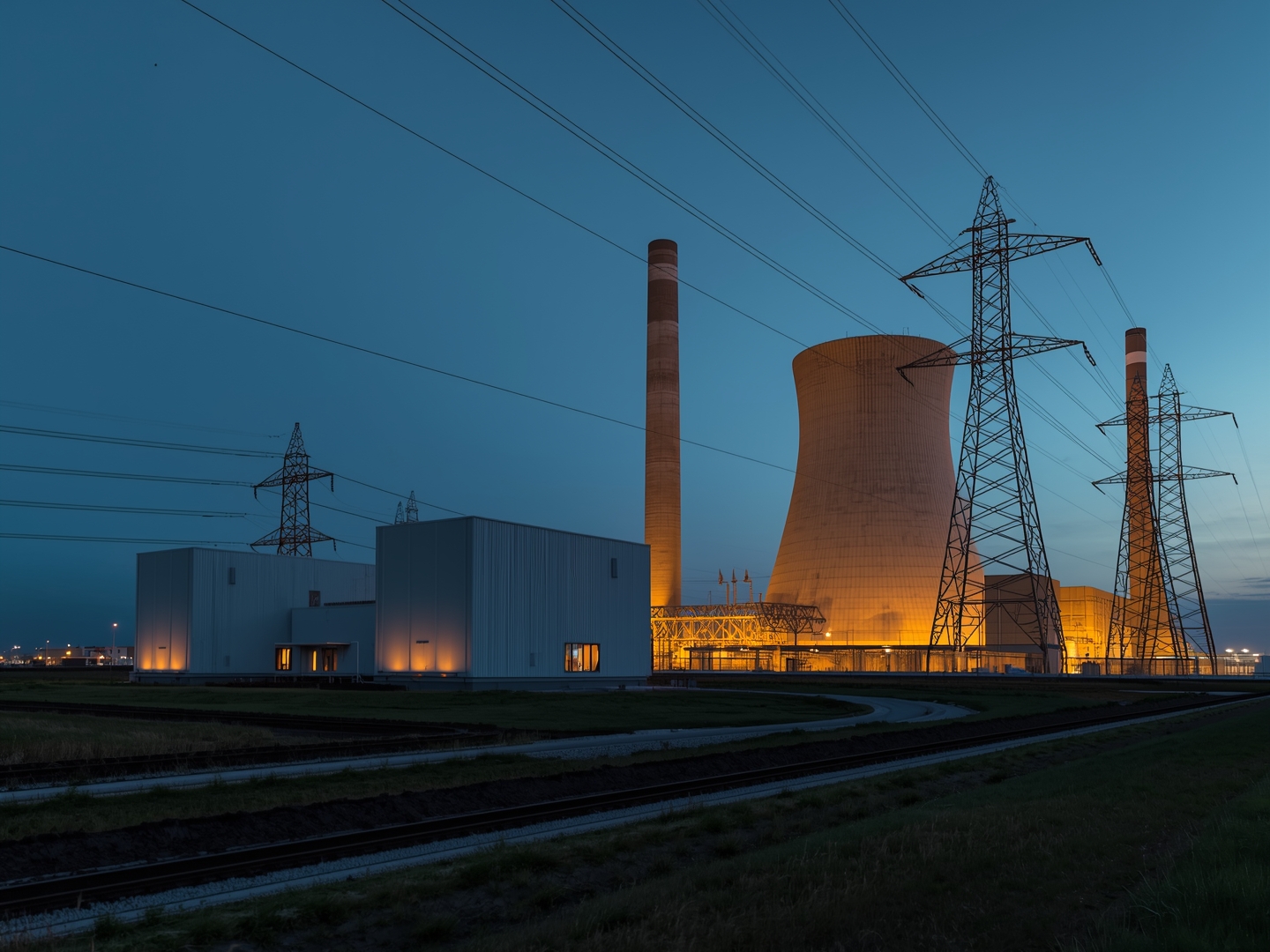
India’s evolving nuclear energy regime, the SHANTI Act, 2025, and the commercial potential of a new generation of nuclear reactors
1. Introduction
India’s pursuit of energy security, industrial competitiveness and decarbonisation has opened a new opportunity in nuclear power in the form of Small Modular Reactors (SMRs). Nuclear energy has traditionally meant large, capital-intensive power stations. It is now increasingly being explored through smaller, modular reactor designs that can supply reliable electricity and industrial heat to locations where conventional nuclear projects may be commercially or technically difficult to deploy.
SMRs could be particularly relevant to India’s energy-intensive industries, including steel, cement, chemicals, fertilisers, refining, data centres and advanced manufacturing. They could also support the repurposing of retiring coal-fired power stations, the production of low-carbon hydrogen and the supply of dependable electricity to industrial clusters.
The opportunity also raises fundamental questions of nuclear licensing, ownership, liability, foreign investment, technology transfer, intellectual property, project financing, environmental approvals and contractual risk allocation.
India’s policy has become significantly more supportive of private participation following the enactment of the Sustainable Harnessing and Advancement of Nuclear Energy for Transforming India Act, 2025 (SHANTI Act). The legislation is intended to modernise the country’s nuclear framework and enable wider participation by private entities, subject to government licensing and regulatory oversight. However, the move from legislative reform to commercially operational nuclear projects depends on the applicable commencement provisions, implementing rules, regulatory authorisations and project-specific approvals.[1]
For businesses and investors, the central question is how the emerging legal framework will allocate the rights, responsibilities, risks and commercial returns associated with developing and deploying SMRs.
2. Understanding Small Modular Reactors
SMRs are nuclear reactors generally designed to produce up to 300 megawatts of electricity per module. They use modular construction, standardised engineering and, in many designs, passive or inherent safety features. Some designs may permit factory fabrication of major components before transportation to the project site.
The term covers a range of technologies, including small pressurised water reactors, advanced water-cooled reactors, high-temperature gas-cooled reactors and other advanced reactor concepts. Their commercial maturity, fuel requirements, operating characteristics and regulatory treatment may differ substantially.
The principal potential advantages include:
- Lower initial capital commitment: Smaller generating units may allow capacity to be added in stages rather than through a single large investment.
- Modular construction: Standardised designs and factory-manufactured components may improve construction efficiency and quality control.
- Industrial integration: SMRs may provide a dependable power source close to industrial consumers.
- Repurposing existing infrastructure: Certain projects may be able to use suitable infrastructure associated with retiring fossil-fuel facilities, subject to nuclear-specific site and safety requirements.
- Decarbonisation: Nuclear electricity and, where the technology permits, industrial heat may support lower-carbon production and hydrogen manufacturing.
- Domestic manufacturing: Indian engineering, heavy fabrication, electrical equipment and precision manufacturing businesses could participate in the supply chain.
None of these benefits is assured. SMR projects remain subject to technology-specific licensing, construction schedules, financing costs, fuel availability, waste management obligations and long-term operational requirements.
For India, the case for SMRs rests on pairing nuclear technology with the country’s established industrial manufacturing base and its growing demand for reliable, round-the-clock electricity.
3. India’s nuclear energy ambitions and policy direction
The Union Budget 2025–26 announced a Nuclear Energy Mission with the objective of achieving 100 GW of nuclear power capacity by 2047. It also allocated ₹20,000 crore for the research, development and deployment of SMRs, with a stated objective of developing and operationalising at least five indigenous SMRs by 2033. These are government targets and budgetary commitments, not guarantees that individual projects will be completed on a particular date.[2]
The government has identified three indigenous designs being developed by the Bhabha Atomic Research Centre (BARC):
| Reactor design | Capacity | Principal intended application |
|---|---|---|
| Bharat Small Modular Reactor (BSMR-200) | 220 MWe | Electricity generation |
| SMR-55 | 55 MWe | Electricity generation |
| High Temperature Gas Cooled Reactor (HTGCR) | Up to 5 MWth | Industrial heat and potential hydrogen production |
The BSMR-200 and SMR-55 are based on pressurised water reactor technology. The HTGCR is being developed as a nuclear heat source for applications including hydrogen production through suitable thermochemical processes.
Government disclosures in August 2026 reported that the indigenous designs had received in-principle approval for engineering and construction, with site-related progress reported for the proposed demonstration projects. In-principle approval should not, however, be equated with final construction authorisation, an operating licence or commercial commissioning.[2]
The policy also contemplates SMRs for brownfield sites, captive industrial power, locations associated with retiring fossil-fuel plants and certain remote applications.
This creates two parallel opportunities: the development of indigenous reactor technology, and a broader industrial ecosystem able to manufacture, construct, finance, operate and service nuclear facilities.
4. The legal status of SMRs in India
4.1 The SHANTI Act, 2025
The SHANTI Act replaces the earlier framework under the Atomic Energy Act, 1962 and the Civil Liability for Nuclear Damage Act, 2010, and consolidates and reforms the law governing nuclear energy and related activities.
The legislation received presidential assent in December 2025. Its purposes include facilitating wider public and private participation in nuclear energy, establishing a statutory framework for nuclear safety regulation and providing a revised regime for civil liability for nuclear damage.[1][3]
In practice, enacting the legislation is one step and operationalising the permissions needed to develop a project is another. Government statements in July 2026 indicated that the implementing rules were still being prepared and that private applications for licences would be considered through the applicable legislative process. Public reporting in August 2026 described consultation on draft rules and regulations. The operative position must therefore be assessed against the commencement notifications, final rules and regulatory instruments in force on the relevant date.[4][5]
The SHANTI Act provides the statutory foundation for broader participation in India’s nuclear sector, but it does not give every private company an automatic right to own, construct or operate an SMR. Participation remains subject to the licensing regime, safety authorisations, applicable restrictions and the final implementing framework.
4.2 Earlier restrictions and what the reform changes
Under the Atomic Energy Act, 1962, important nuclear activities were subject to substantial governmental control, and key permissions relating to atomic energy were restricted to specified government entities or government companies. This limited the scope for independent private participation in nuclear power generation.
The SHANTI Act is intended to widen the permissible field of participation by public and private entities, including in research and development and nuclear facility development, subject to the statutory framework.
For private industry, this could change the commercial position in several respects:
- Greater scope for participation in licensed nuclear activities.
- Opportunities to invest in or collaborate on nuclear projects through legally permissible structures.
- Wider opportunities for domestic equipment manufacturers and technology developers.
- A possible role for private capital in developing and deploying nuclear capacity.
- New contractual relationships among technology providers, project developers, equipment suppliers, utilities and industrial consumers.
Each opportunity must be verified against the relevant activity-specific licensing requirements and restrictions. A company authorised to manufacture a component, for example, does not thereby acquire permission to own or operate a nuclear power plant.
4.3 Nuclear licensing and regulatory oversight
Nuclear projects go through a more demanding regulatory process than conventional power projects. The legal framework must address the safety of the proposed technology, site suitability, construction quality, commissioning, operational safety, security, radiation protection, emergency preparedness and eventual decommissioning.
The SHANTI Act places the Atomic Energy Regulatory Board (AERB) on a statutory footing. The exact allocation of functions and the applicable procedural requirements must be assessed under the Act and the regulations in force when a project is developed.[1]
For an SMR developer, the legal workstream will ordinarily need to address:
- Eligibility of the proposed applicant and ownership structure.
- Approval of the reactor technology and its design.
- Site selection, land rights and siting permissions.
- Construction and installation authorisations.
- Nuclear safety and security requirements.
- Commissioning and operating permissions.
- Fuel procurement, handling, storage and transport.
- Radioactive waste management and decommissioning.
- Emergency planning, insurance and liability compliance.
- Continuing inspections, reporting and regulatory obligations.
The precise sequence, documentary requirements and approvals will depend on the reactor design, project structure and applicable implementing rules.
4.4 Imported SMR technology and foreign collaboration
Foreign technology providers are likely to play a part in India’s SMR programme. International collaboration could involve reactor designs, engineering services, specialised components, digital control systems, fuel technology, technical assistance and manufacturing know-how.
A foreign reactor design approved in another jurisdiction is not, for that reason alone, eligible for deployment in India. Technology acceptance, domestic licensing, national security considerations, safeguards, fuel arrangements and compliance with Indian law must be evaluated separately.
The legal framework for a foreign collaboration should therefore address:
- The right to use and adapt the reactor design in India.
- Access to engineering information and technical documentation.
- Ownership and permitted use of intellectual property.
- Restrictions on onward transfer of technology and technical data.
- Export-control and sanctions compliance.
- Access to proprietary software, updates and technical support.
- Domestic manufacturing and localisation obligations, where applicable.
- Responsibility for design defects, equipment failures and regulatory non-compliance.
- Long-term supply, maintenance and technology support.
A commercial licence to use intellectual property is not regulatory approval to deploy the underlying reactor, and a collaboration agreement should not be drafted as if it were.
5. Nuclear liability: a critical issue for investors and technology providers
Civil liability for nuclear damage is one of the most commercially sensitive parts of the new framework.
The Civil Liability for Nuclear Damage Act, 2010 established a statutory regime for nuclear incidents, including operator liability and a right of recourse against suppliers in specified circumstances. The SHANTI Act replaces that framework with a revised, graded approach to liability.
Government disclosures in 2026 described maximum operator liability amounts varying by category of nuclear installation, from ₹100 crore to ₹3,000 crore, together with an overall nuclear incident liability ceiling expressed by reference to 300 million Special Drawing Rights or a prescribed amount. The applicable amount for a specific SMR must be determined from the operative statutory provisions and its classification; these figures are not a universal limit for every project.[1][4]
The change matters most to foreign reactor vendors, engineering contractors, equipment suppliers, insurers and project financiers.
A nuclear project may involve substantial risks arising from defective design, manufacturing deficiencies, construction errors, inadequate maintenance, software failures, operational mistakes or failures in emergency response. The allocation of those risks cannot be left to general indemnity language alone.
Project agreements should address:
- The statutory liability of the licensed operator.
- Contractual responsibility for design, engineering and manufacturing defects.
- The scope and limitations of supplier indemnities.
- Insurance and financial security requirements.
- Liability for ordinary contractual breaches and non-nuclear damage.
- The interaction between contractual caps and mandatory statutory obligations.
- Access to technical records, incident investigations and evidence.
- Rights of recourse, contribution and recovery where legally available.
- Long-tail claims, limitation periods and survival of obligations.
- Dispute resolution, governing law and enforcement of judgments or awards.
The SHANTI Act’s revised liability framework is also the subject of constitutional litigation. The challenges raise questions about supplier recourse, the statutory allocation of liability, constitutional rights and the independence of the regulatory framework. The status and outcome of those proceedings are material to legal due diligence and should be checked before any transaction or investment decision.[6]
For investors, the headline statutory liability ceiling is only one part of the risk analysis. Actual exposure depends on the applicable law, the nature of the incident, contractual allocation, insurance arrangements and the final judicial and regulatory position.
Last Updated on 22 October, 2026

By entering the email address you agree to our Privacy Policy.